
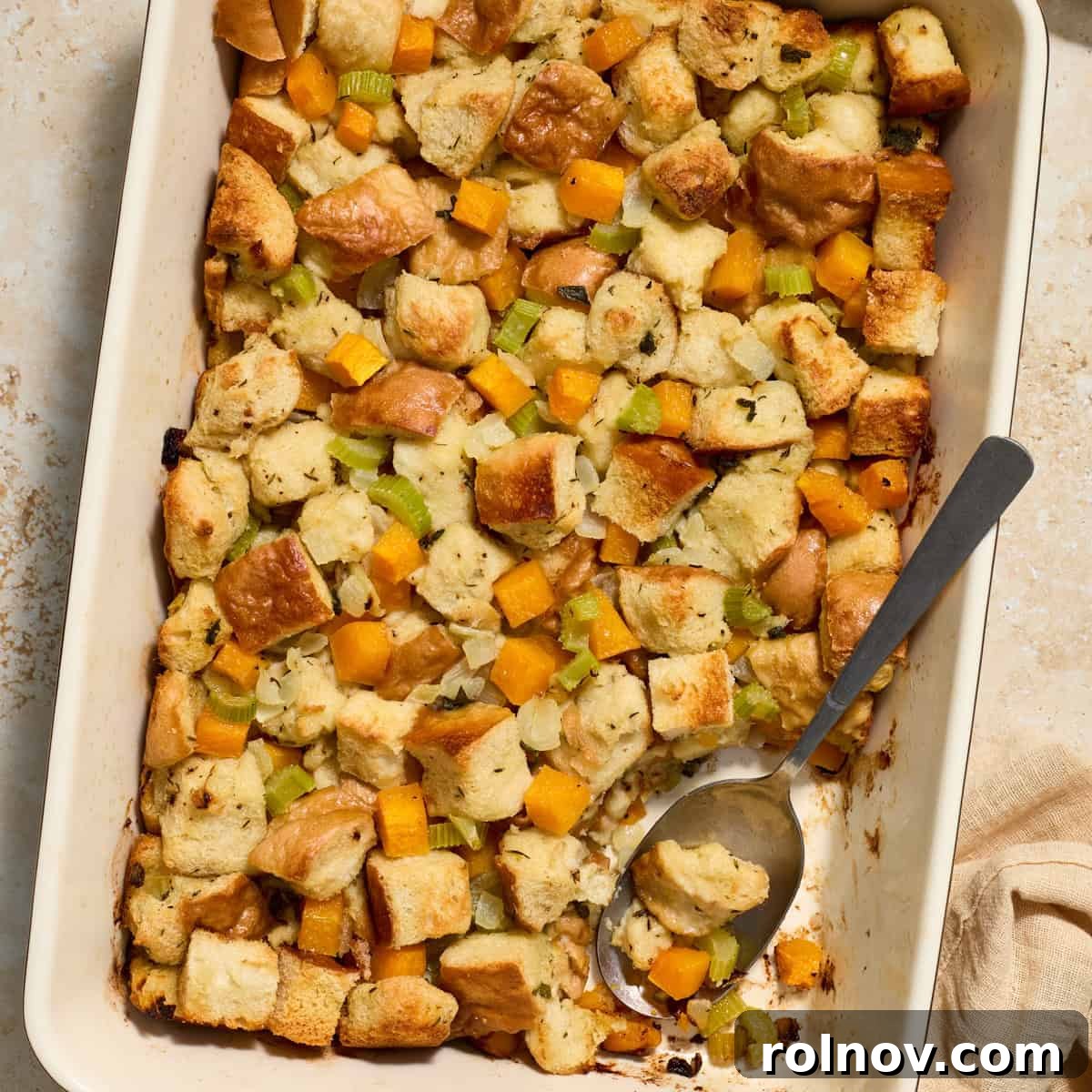
A truly exceptional holiday side dish, this Butternut Squash Stuffing recipe redefines comfort food. Combining the earthy sweetness of butternut squash with savory herbs like fresh sage, rich butter, and sturdy, crusty bread, it’s a delightful complement to any festive spread. Perfect for Thanksgiving, Christmas, or simply a cozy evening at home, this stuffing promises a memorable culinary experience.
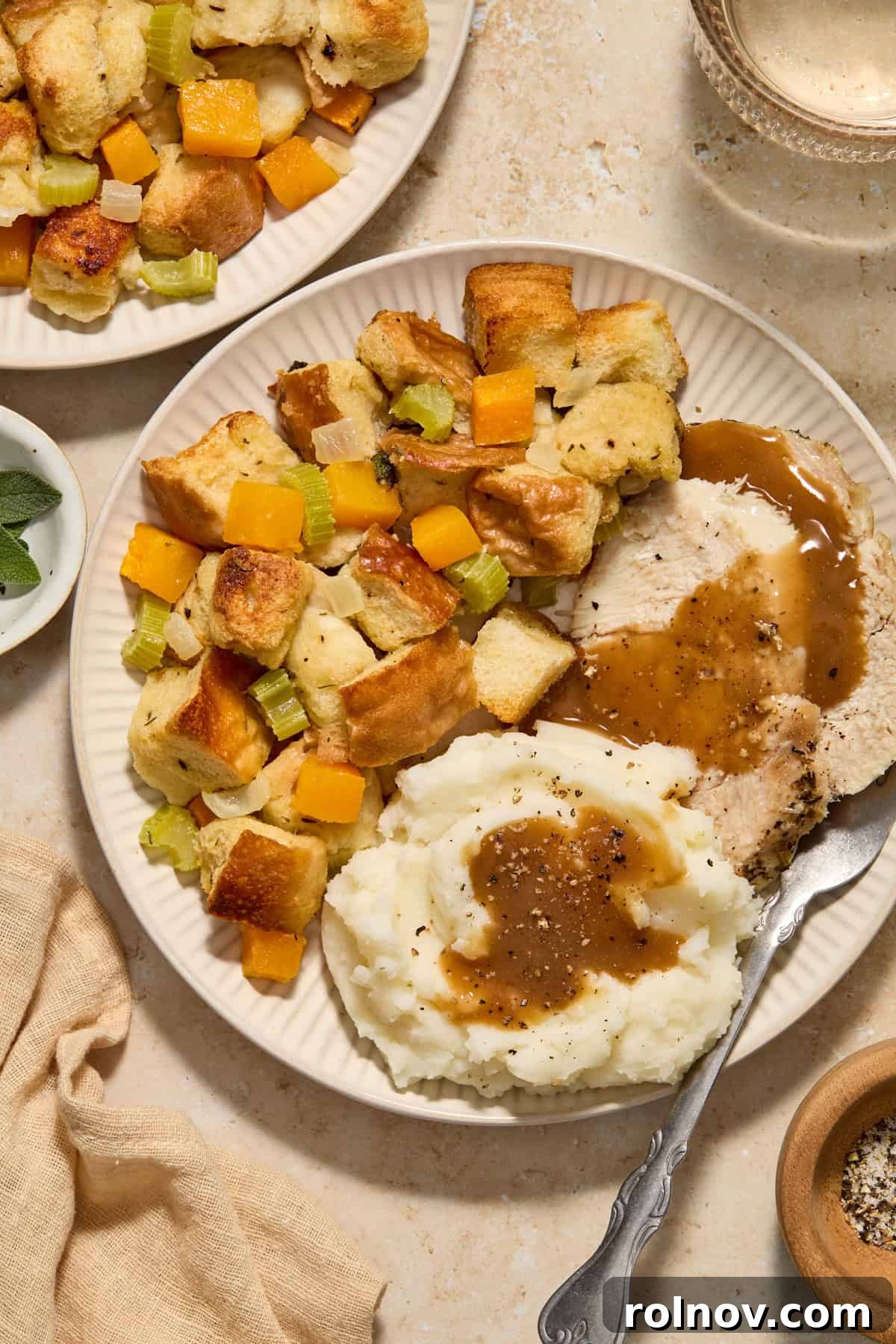
There’s an undeniable truth about holiday meals: the stuffing often steals the show. While the main course holds its esteemed place, it’s often the aromatic, perfectly seasoned stuffing that truly captures hearts and palates. It embodies the essence of tradition, comfort, and togetherness, making it a cornerstone of any festive table.
Our family gatherings have always featured a beloved Simple Apple Sage Stuffing, which, without fail, vanishes within minutes. This year, we’re introducing an exciting new contender to the holiday lineup to ensure there’s always enough delicious stuffing to go around. This Butternut Squash Stuffing recipe is a fantastic addition, offering a delightful twist on a classic while easily becoming a new family favorite.
This recipe offers a convenient “two-for-one” benefit, merging the rich flavors and nutritional goodness of butternut squash with the beloved texture of traditional stuffing. It’s a versatile dish that provides both a vegetable and a hearty side in one delicious package. For a truly simple and satisfying main course, consider pairing this stuffing with a tender Crock Pot Turkey Breast. And if you’re looking for even more stuffing inspiration, don’t miss our hearty Beefy Cornbread Stuffing.
Why You’ll Adore This Butternut Squash Stuffing
-
A Modern Twist on a Timeless Classic: This Butternut Squash Stuffing takes the familiar comfort of traditional stuffing and elevates it with an innovative, delicious element. The addition of roasted butternut squash introduces a delicate sweetness and a wonderfully tender texture that perfectly complements the savory herbs and bread. It transforms a tried-and-true recipe into something uniquely special, offering a fresh perspective on a holiday staple without straying too far from its comforting roots. It’s a delightful surprise for guests and a fantastic way to introduce new flavors to your festive spread.
-
Effortless Preparation for Busy Holidays: Despite its gourmet appeal, this butternut squash stuffing recipe is remarkably straightforward to prepare, making it ideal for bustling holiday seasons. We understand that time is precious, which is why we’ve designed this recipe to be as user-friendly as possible. For an even quicker prep, pre-chopped butternut squash is readily available in most grocery stores, eliminating a significant step. Embracing smart shortcuts like this means you can create a truly impressive dish with minimal fuss, allowing you more time to enjoy the festivities and less time in the kitchen.
-
Perfect for Utilizing Stale Bread (and More!): Stuffing is not just a holiday exclusive; it’s a brilliant year-round solution for giving new life to day-old bread. Instead of discarding bread that’s past its prime, transform it into this incredibly flavorful side dish. The slightly dried-out texture of stale bread is actually crucial for stuffing, as it allows the bread cubes to absorb the rich, savory broth and butter without becoming soggy. This ensures a stuffing that’s moist and tender on the inside with a delightful crispness on top. It’s an economical and incredibly delicious way to minimize food waste while enjoying a satisfying meal any time of year.
Essential Ingredients for Perfect Stuffing
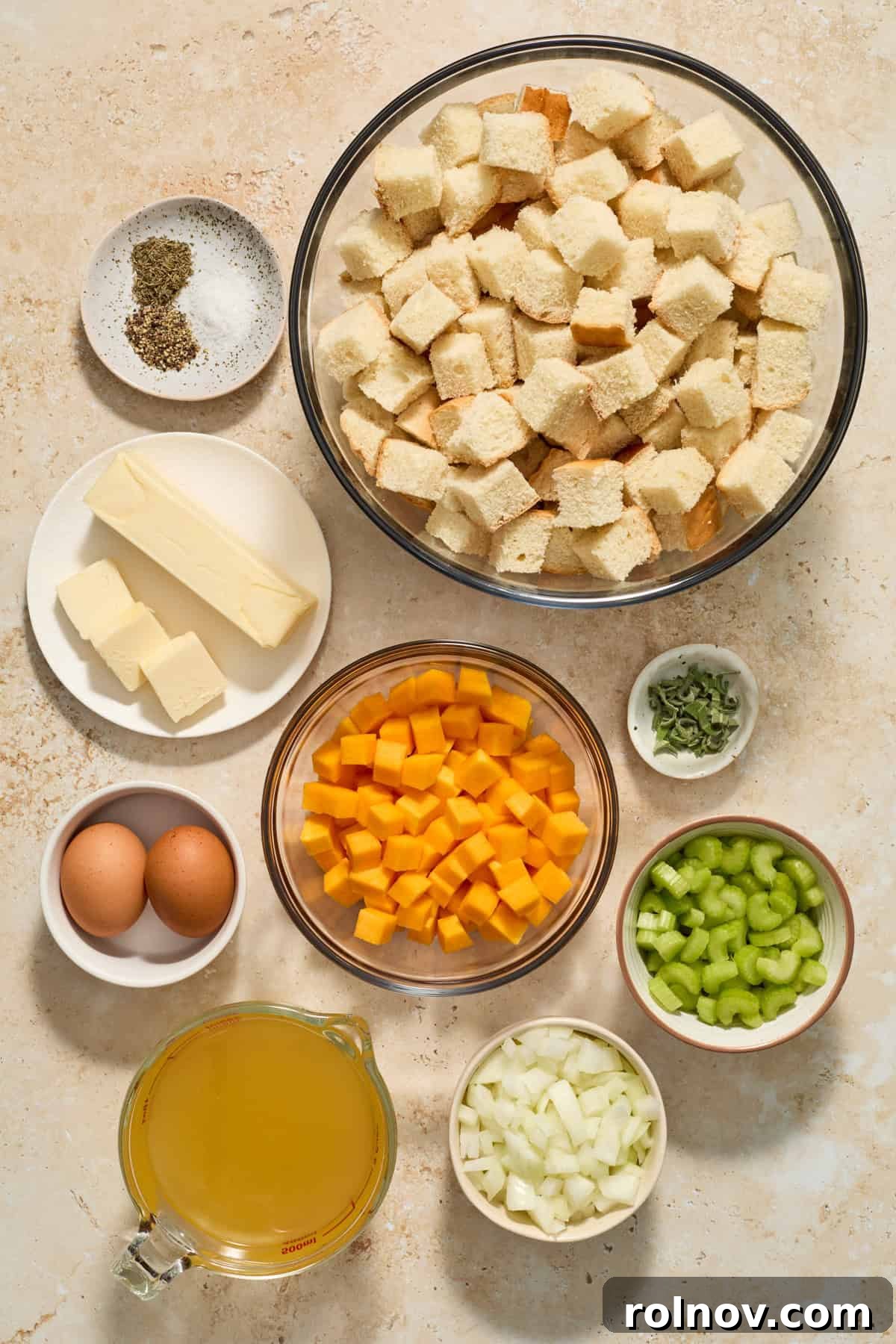
Crafting the perfect butternut squash stuffing begins with selecting quality ingredients that build layers of flavor and texture. Here’s a closer look at what you’ll need and why each component is vital:
-
Bread: The foundation of any great stuffing. We highly recommend using crusty bakery loaves such as French, Italian, or a sturdy sourdough. These types of bread offer a robust structure that holds up well during baking, preventing the stuffing from becoming mushy. While whole grain bread can be used, white bread is generally preferred for its lighter texture and ability to absorb flavors more readily. Ensure your bread is dried out—either by leaving it out overnight or toasting it lightly—to achieve the ideal stuffing consistency.
-
Butternut Squash: The star ingredient that adds a beautiful sweetness, vibrant color, and creamy texture. It’s crucial to cut the butternut squash into small, uniform cubes, approximately 1/2 to 3/4 inch. This ensures even cooking and allows the squash to become perfectly tender within the stuffing’s baking time. Don’t be fooled by photos; a zoom lens can make the cubes appear larger. If you need assistance with chopping, many online guides offer helpful tips. As a convenient alternative, pre-chopped butternut squash is often available. Should butternut squash be unavailable, sweet potatoes can make an excellent substitute, offering a similar sweetness and texture.
-
Broth: The liquid that binds all the flavors together and keeps the stuffing moist. Chicken broth is a classic choice, providing a rich, savory base that enhances the overall flavor profile. However, for a vegetarian version or if you prefer, vegetable broth works beautifully. Chicken stock can also be used, offering a slightly richer and more concentrated flavor. Choose a low-sodium option to better control the seasoning of your dish.
-
Celery: An indispensable aromatic that provides a delicate crunch and a fresh, slightly peppery flavor. It’s a key component in the traditional stuffing flavor profile, offering a textural contrast to the soft bread and squash.
-
Onion: Another essential aromatic that forms the savory backbone of the stuffing. Sweet yellow or white onions are recommended for their mild, slightly sweet flavor when sautéed. Red onion, with its stronger, sharper taste, is generally not advised for this particular recipe as it can overpower the delicate flavors of the squash and herbs.
-
Sage: The quintessential herb for stuffing, sage provides an earthy, peppery, and slightly minty flavor that is synonymous with holiday cooking. Fresh sage is highly recommended for its vibrant aroma and superior flavor; it truly makes a difference. While dried sage can be used, fresh sage offers an unparalleled aromatic depth.
-
Thyme: This herb adds a subtle, earthy, and slightly floral note that complements the sage beautifully. Dried thyme was used in the recipe development images when fresh was unavailable, and it works wonderfully. However, if fresh thyme is accessible, its brighter, more nuanced flavor will elevate the dish even further.
-
Butter: The secret to rich, deeply flavored stuffing. Butter is used both to sauté the aromatics and to drizzle over the top, creating a golden, crispy crust. Unsalted butter is generally preferred as it allows you to control the salt content precisely. If using salted butter, simply adjust the amount of added salt accordingly.
Crafting Your Butternut Squash Stuffing: A Step-by-Step Guide
This section provides a descriptive overview of the cooking process to help you visualize each stage. For precise measurements and detailed instructions, please refer to the comprehensive recipe card further below.
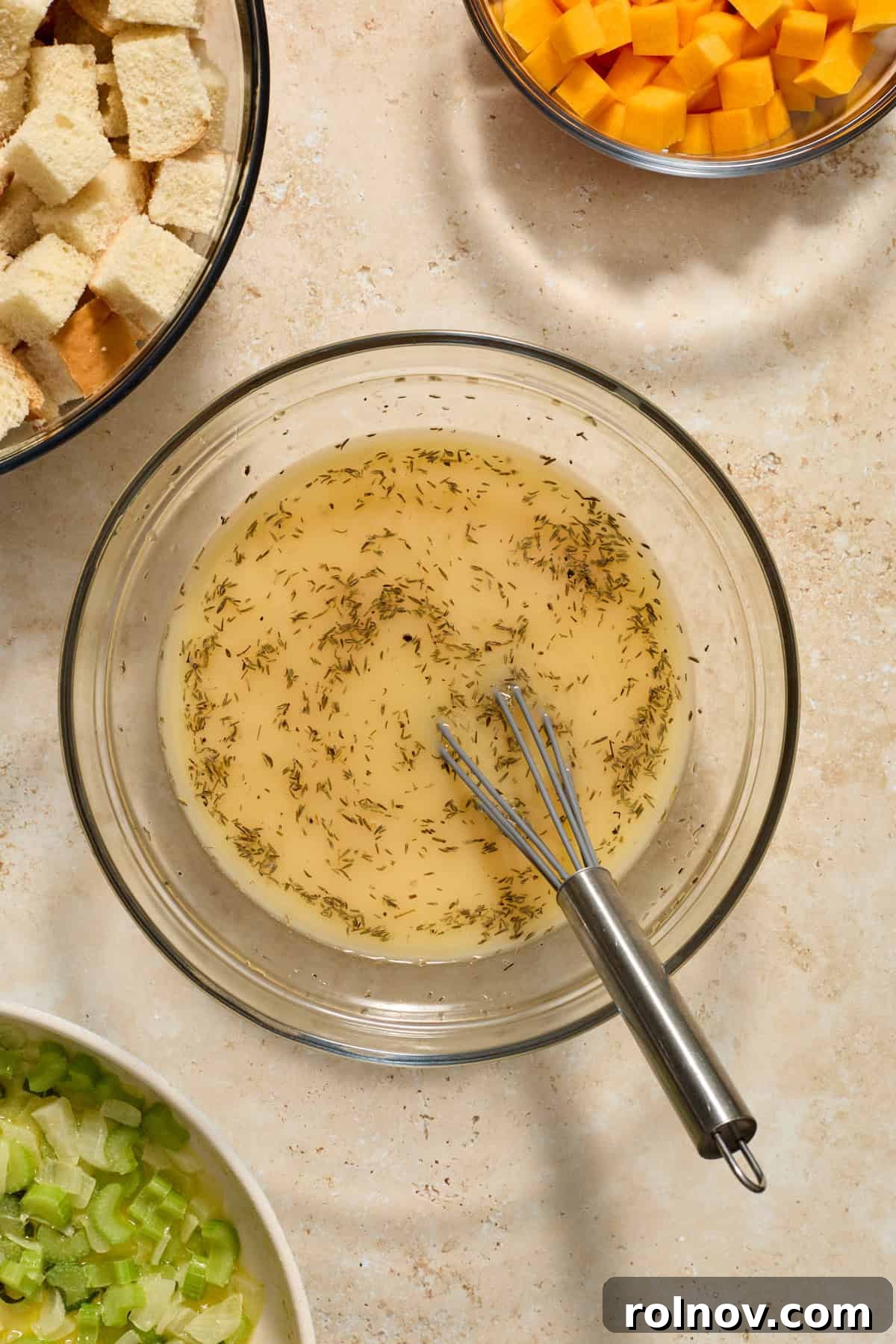
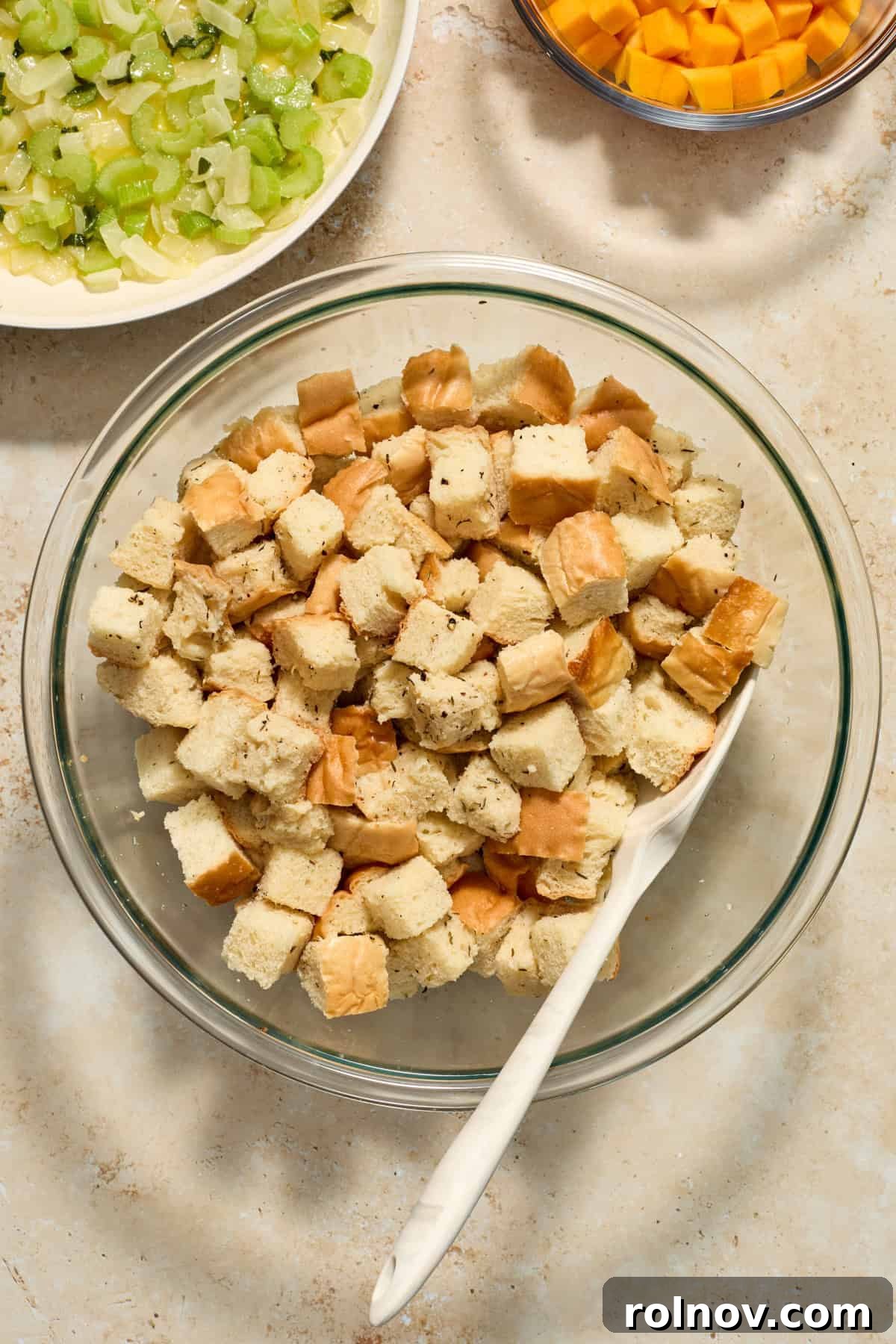
Begin by ensuring your bread cubes are adequately dried. This crucial step prevents your stuffing from becoming overly soggy. You can achieve this by either leaving the cubed bread out overnight or by baking it at a low temperature until crisp. Once ready, transfer the dried bread cubes into a generously sized mixing bowl, preparing them to absorb the rich flavors that are to come.
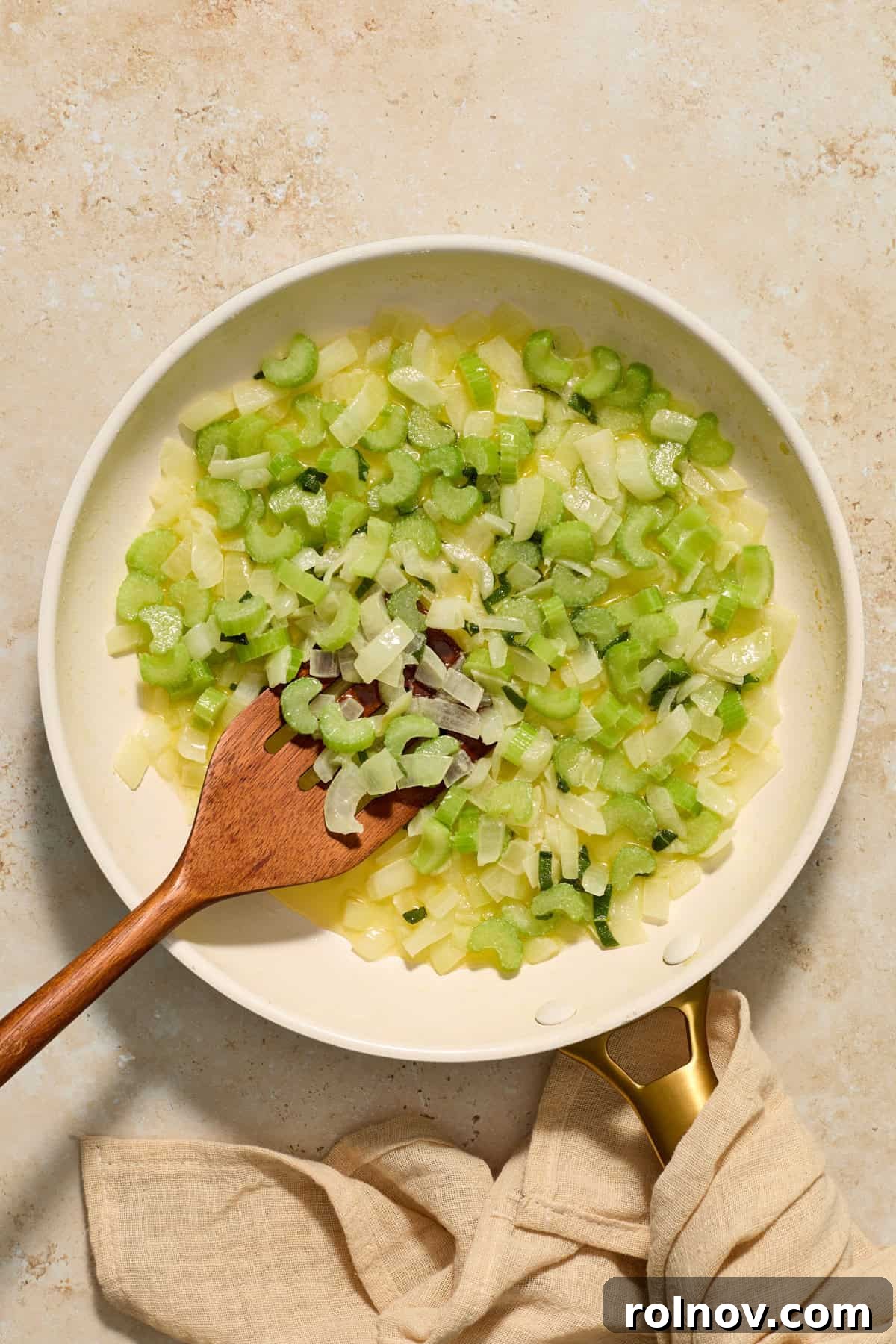
Next, in a large skillet, melt half a stick of butter over medium heat. Add your finely chopped celery and onions, sautéing them gently until they become tender and translucent. This step softens the vegetables and allows their sweet, aromatic flavors to develop. Stir in the fresh sage during the last minute of cooking, letting its fragrant oils infuse with the vegetables.
While your aromatics are cooking, turn your attention to the liquid base. In a separate medium bowl, whisk together the chicken broth, eggs, thyme, salt, and pepper until well combined. This mixture is essential for moistening the bread and distributing the savory seasonings throughout the stuffing. Carefully pour this flavorful egg and broth mixture over the dried bread cubes in the large mixing bowl, tossing gently to ensure every piece of bread is evenly coated and begins to soak up the liquid.
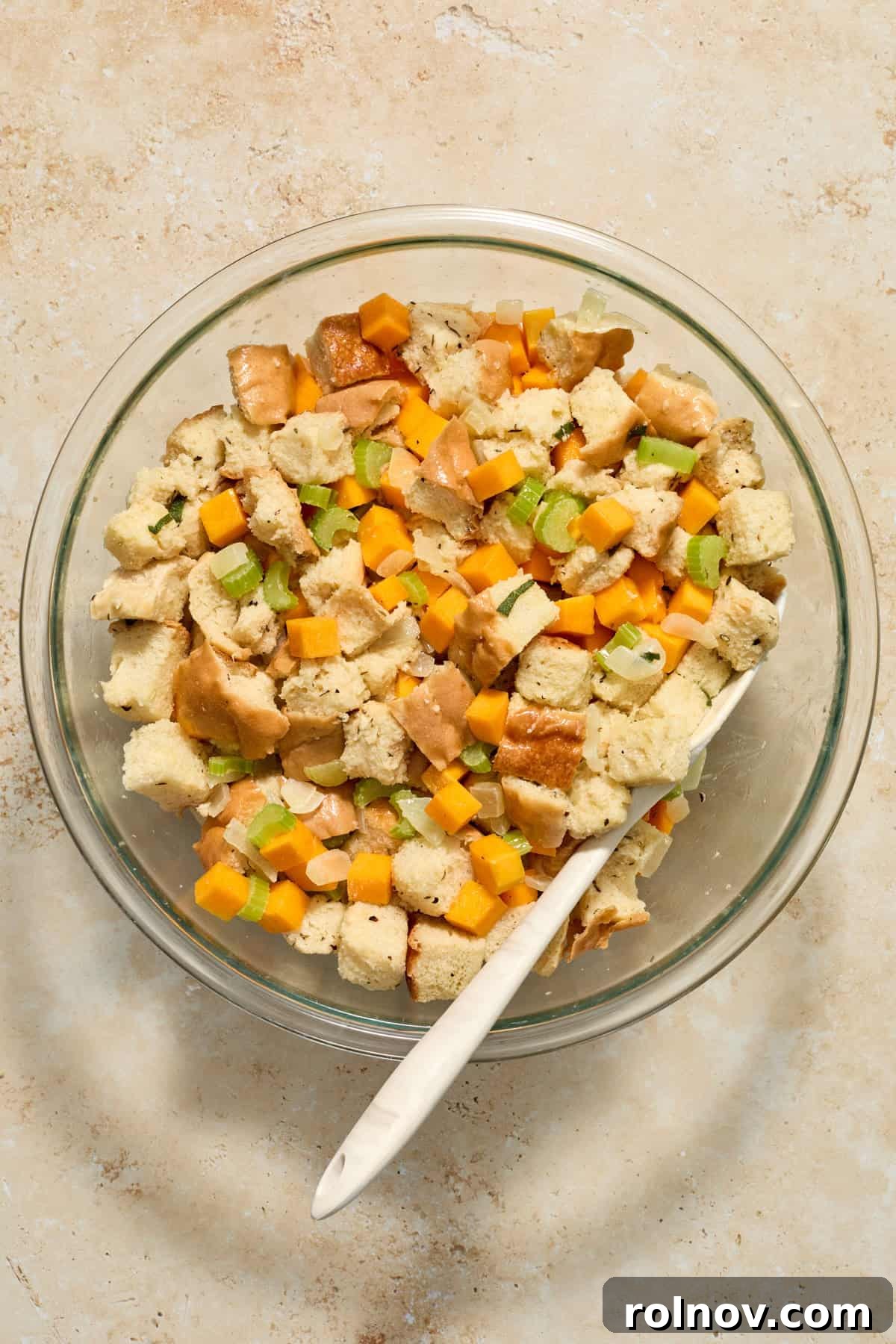
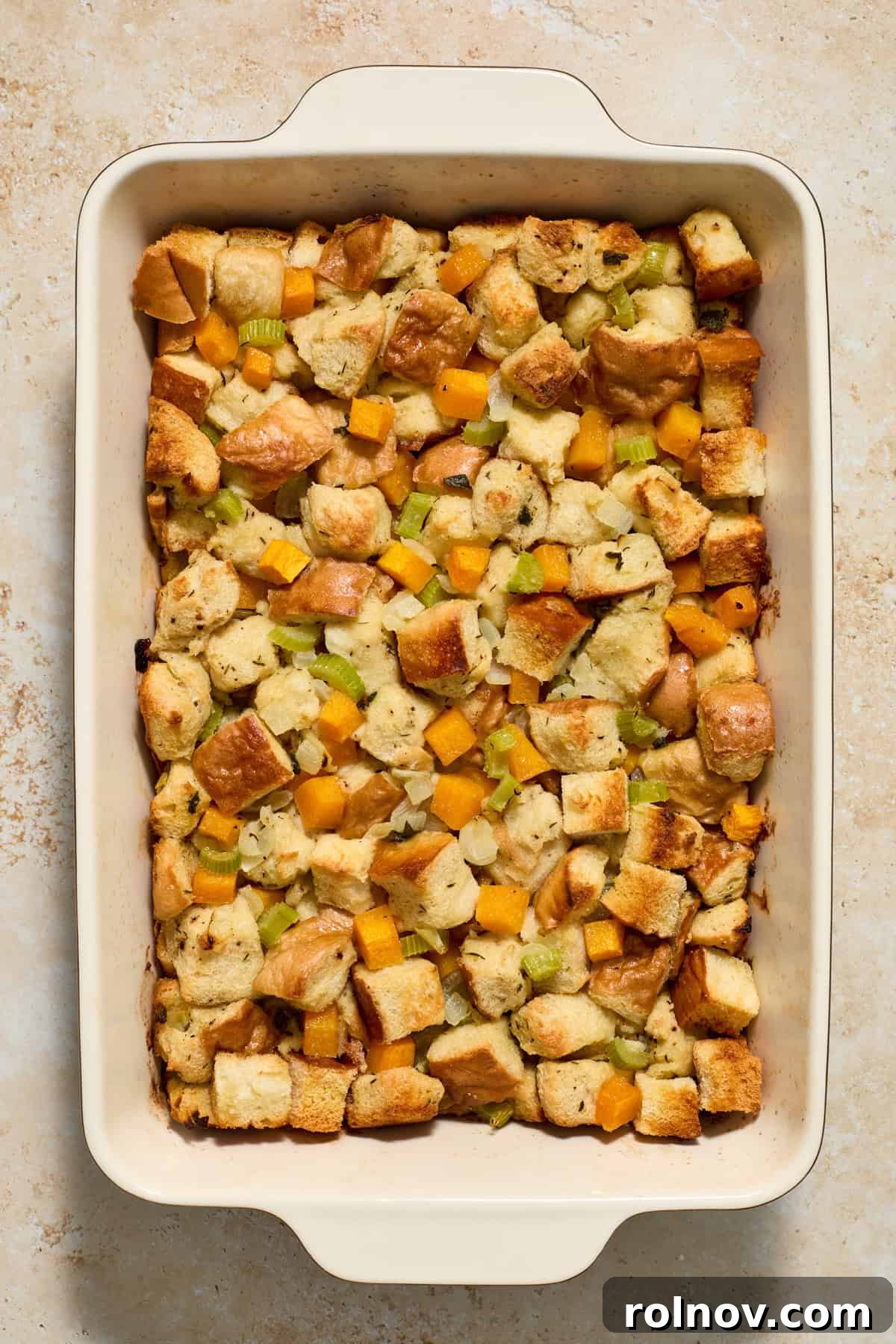
Now, combine the sautéed celery and onion mixture with the bread, ensuring all the flavorful buttery liquid from the skillet is incorporated. Finally, add the raw butternut squash cubes to the mixture and stir well to distribute them evenly among the bread. This ensures that as the stuffing bakes, the squash will soften and integrate beautifully.
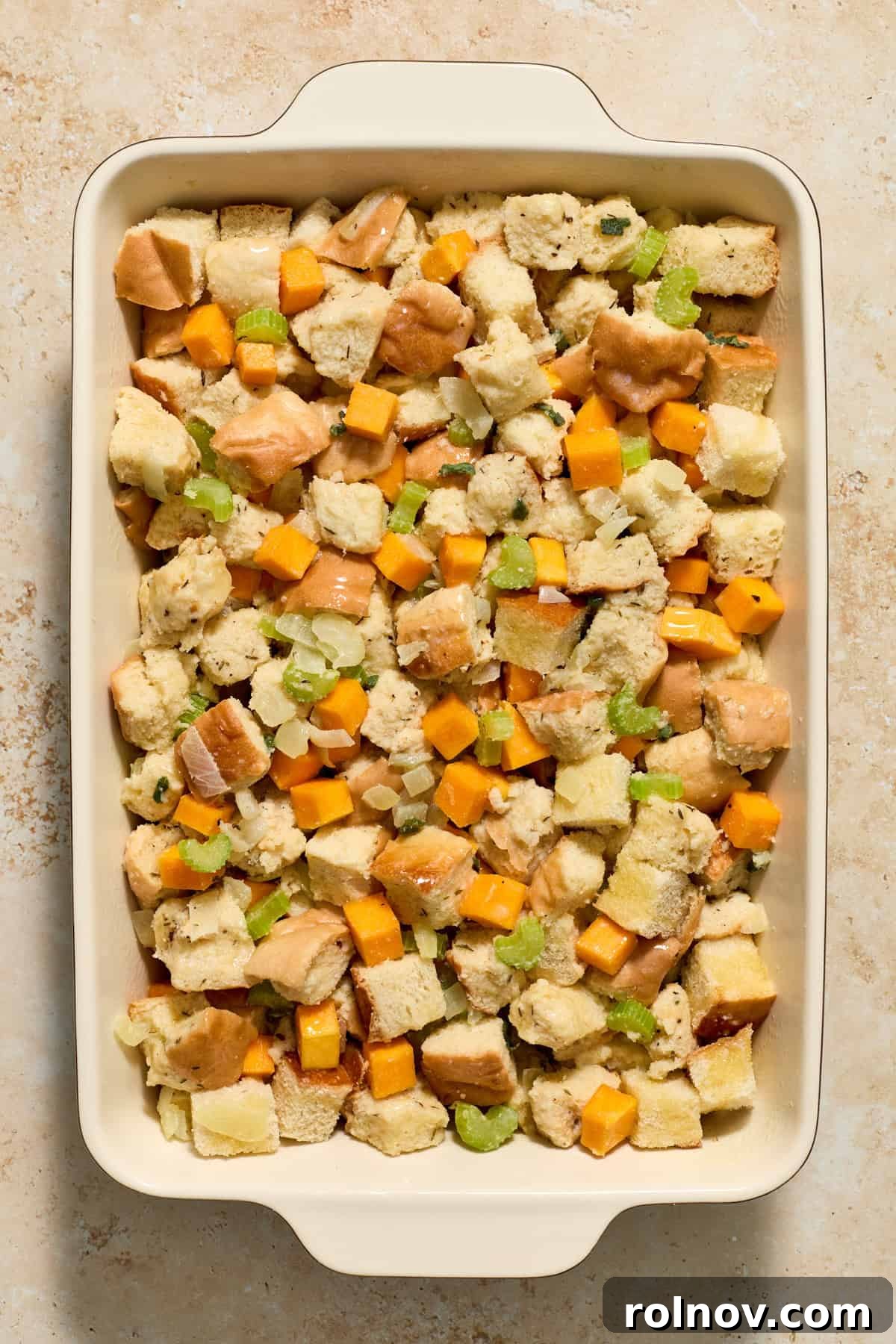
Transfer the entire stuffing mixture into a greased 9×13 inch baking pan. Melt the remaining butter and drizzle it generously over the surface of the stuffing. This final touch of butter will help create a gorgeously golden and crispy top crust as it bakes.
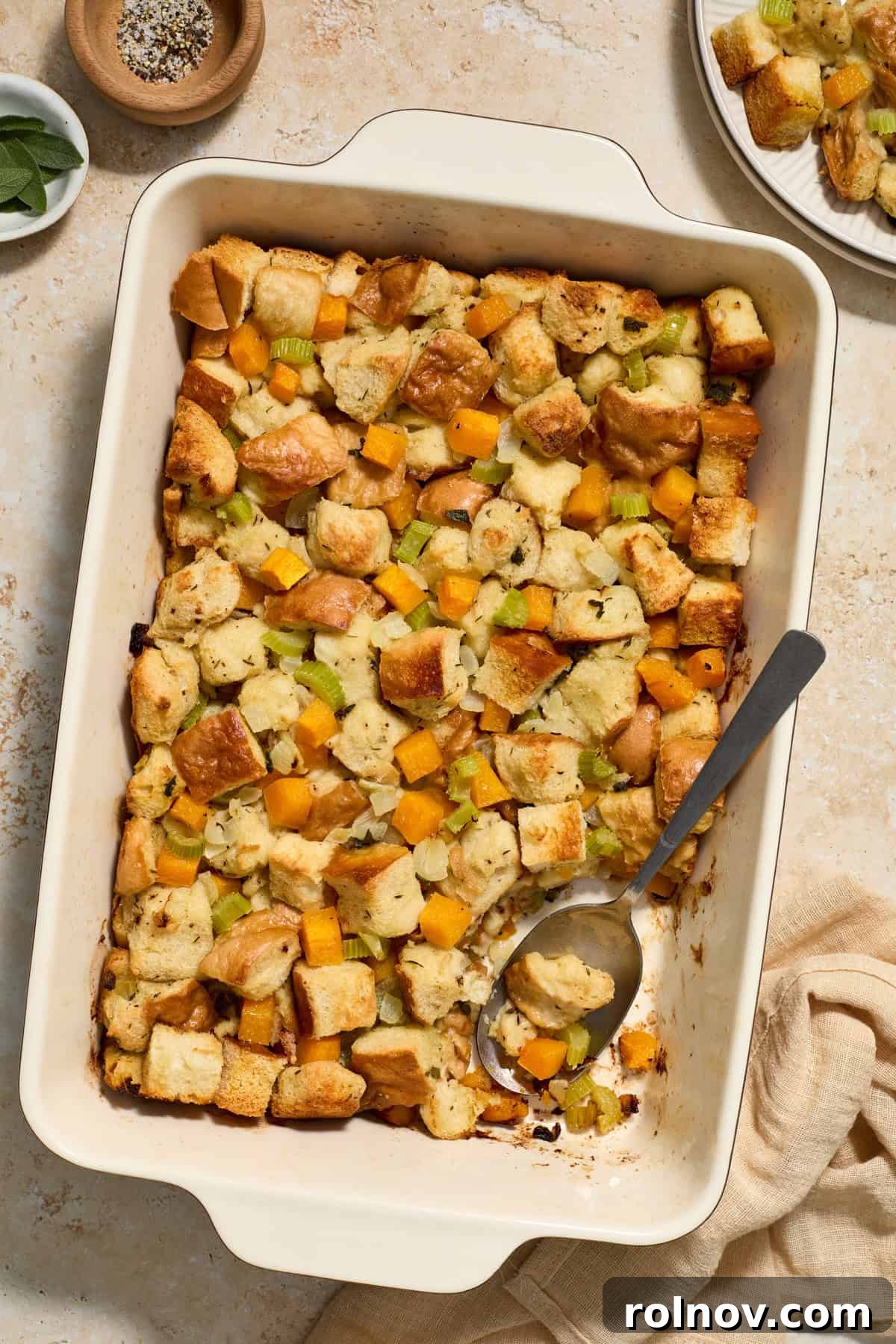
Preheat your oven to 375°F (190°C). Bake the stuffing covered with aluminum foil for the initial 30 minutes. The foil helps to steam the stuffing, ensuring it cooks through and prevents the top from browning too quickly. After 30 minutes, remove the foil and continue baking for another 10-15 minutes, or until the top is beautifully golden brown, the butternut squash is perfectly tender, and the center is set.
Once baked to perfection, allow the stuffing to cool for several minutes before serving. This brief resting period helps the stuffing set and makes it easier to serve. Enjoy this delightful Butternut Squash Stuffing as a rich, flavorful addition to your meal.
Pro Tips for the Best Butternut Squash Stuffing
-
Precision in Squash Cubes: The size of your butternut squash cubes is paramount for achieving perfectly cooked stuffing. Aim for uniform 1/2-inch to 3/4-inch cubes. If the pieces are too large, they won’t have enough time to soften properly within the stuffing’s baking window, resulting in an unpleasantly firm texture. Consistent sizing ensures that every bite offers tender, sweet squash harmoniously blended with the savory bread.
-
Handling Bread Ends: When preparing your bread, it’s generally best to avoid using the very hard ends of the loaves. Once dried out, these pieces can become overly dense and tough, creating an undesirable texture contrast in your finished stuffing. To minimize food waste, consider setting these crusty ends aside to serve with dinner the night before, perhaps with a soup or salad, so they don’t go to waste.
-
Dried Sage Substitution: While fresh sage delivers an unparalleled aroma and flavor, it’s not always readily available. If you find yourself without fresh sage, you can easily substitute it with dried sage. As a general rule for this recipe, use 1 teaspoon of dried sage for every tablespoon of fresh sage specified. This adjustment ensures you capture the essential herbaceous notes of the dish.
-
Streamlined Holiday Prep: To make your holiday cooking experience as smooth and stress-free as possible, take advantage of advance preparation. Most of the vegetable chopping can be done the night before. Dice your onions, celery, and butternut squash, then store them in separate airtight containers in the refrigerator. This simple step drastically reduces your day-of cooking time, allowing you to enjoy more moments with family and friends.
Optional Add-Ins to Elevate Your Stuffing
This butternut squash stuffing is undeniably delicious on its own, but it also serves as a fantastic canvas for additional flavors and textures. Here are some optional add-ins to make your dish even more extraordinary:
-
Sausage: For a heartier and more savory stuffing, consider browning some Italian sausage (sweet or hot) or even breakfast sausage. Cook it until it’s nicely caramelized, then drain any excess fat before tossing it into the stuffing mixture along with the butternut squash. The rich, spiced flavor of sausage pairs wonderfully with the sweetness of the squash.
-
Additional Veggies: Mushrooms are an excellent addition for an extra layer of umami and earthiness. Sauté sliced mushrooms along with the onions and celery. You might need to add a touch more butter or olive oil if doing so, as mushrooms tend to absorb fat. Other vegetables like bell peppers or leeks can also be incorporated for added color and flavor.
-
Nuts: For an irresistible crunch and nutty depth, stir in some chopped walnuts or pecans. Toasting them lightly before adding them will intensify their flavor. These nuts add a textural contrast that elevates the overall stuffing experience.
-
Bacon: Crispy, chopped bacon brings a smoky, salty, and utterly delicious twist to this dish. Cook the bacon until crisp, crumble it, and then fold it into the stuffing mixture. You can even use a tablespoon or two of the rendered bacon fat to sauté your vegetables for an extra layer of flavor.
-
Cranberries: Whether you prefer dried cranberries for a chewy, concentrated sweetness or fresh cranberries for a tart burst, they add a festive touch and a beautiful counterpoint to the savory elements. Add them with the butternut squash for a pop of color and flavor.
-
Apples: Inspired by our beloved simple apple stuffing recipe, adding diced apples introduces a delightful fruitiness and a hint of sweetness. Choose a firm, slightly tart apple variety like Honeycrisp or Granny Smith. Add them in with the butternut squash.
-
Cornbread: For a different texture and flavor profile, substitute about half of the regular bread cubes with cornbread cubes. This creates a stuffing with a slightly denser, crumbly texture and a subtle corn sweetness that is incredibly comforting.
-
Other Herbs: Experiment with other fresh savory herbs like rosemary or parsley. A touch of fresh rosemary, for instance, adds a piney, peppery aroma that beautifully complements the butternut squash and sage. Add them along with the other herbs during the sautéing process.
Storage and Reheating Tips
Proper storage is key to enjoying your delicious butternut squash stuffing for days to come. Here’s how to keep it fresh and flavorful:
-
Refrigerator Storage: Allow any leftover stuffing to cool completely before transferring it to an airtight container. Store it in the refrigerator for approximately 3-4 days. When reheating, you might find that the stuffing has dried out slightly. A simple trick is to drizzle a tablespoon or two of melted butter or a splash of chicken broth over the top before warming it up. Reheat in the oven at 300°F (150°C) until warmed through, or in the microwave in individual portions.
-
Freezing Instructions: This butternut squash stuffing freezes beautifully, making it an excellent make-ahead option. Ensure the entire dish has cooled down to room temperature before preparing it for the freezer. Transfer the cooled stuffing into an airtight, freezer-safe container or a heavy-duty freezer bag, pressing out as much air as possible to prevent freezer burn. It can be frozen for up to 3 months. When you’re ready to enjoy it, thaw the stuffing in the refrigerator overnight. Once thawed, reheat it gently in the oven, covering it with foil initially to retain moisture, then uncovering for the last few minutes to crisp up the top.
Perfect Pairings: What to Serve with This Butternut Squash Stuffing
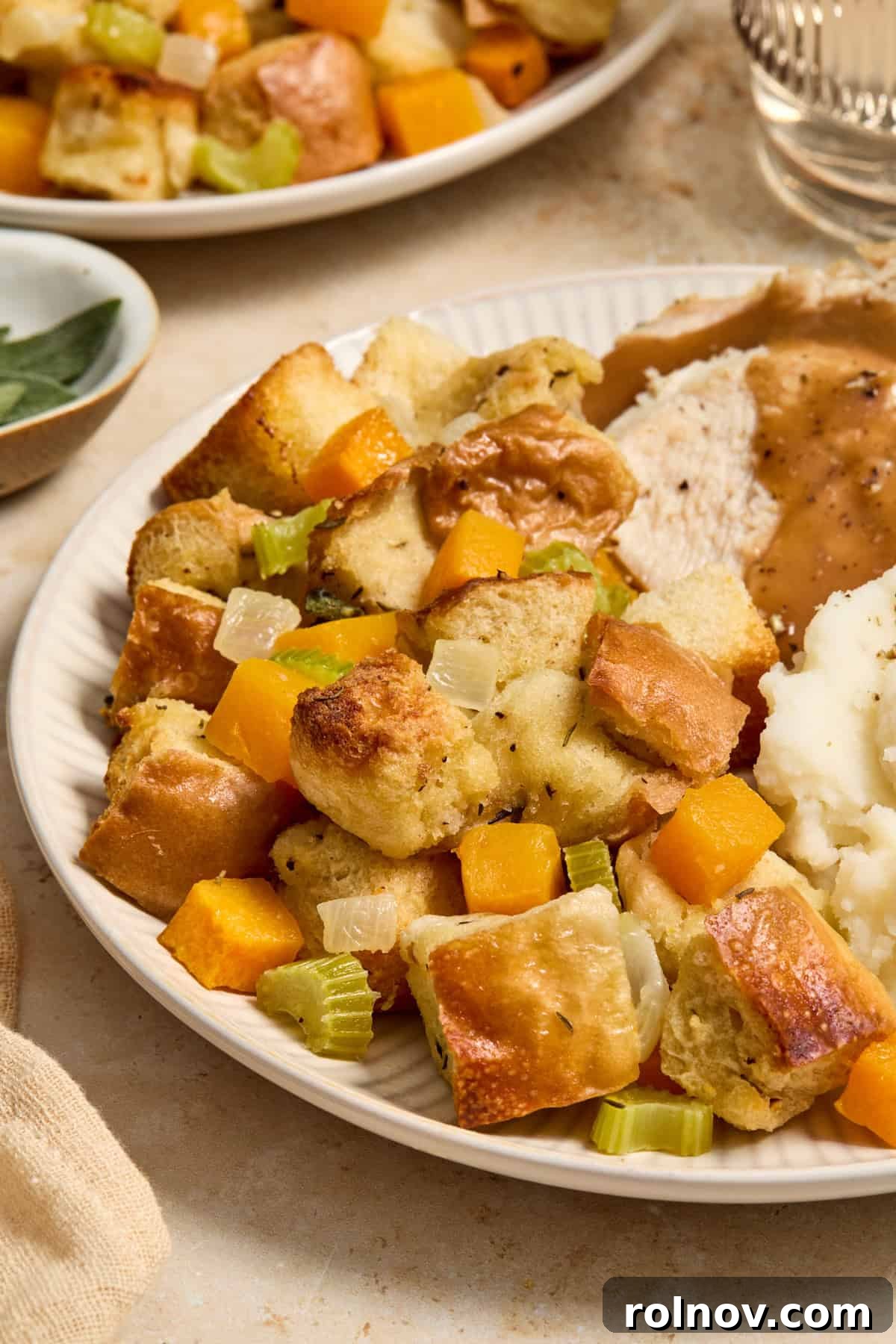
While this butternut squash stuffing shines as a standalone dish, it truly comes alive when paired with complementary mains and sides. Beyond the traditional turkey, mashed potatoes, and gravy that define holiday feasts, this versatile stuffing offers a fantastic culinary companion to a variety of dishes.
One of our absolute favorite pairings, especially for a special “turkey day” or Christmas dinner, is with this incredible Instant Pot Pork Tenderloin and Apples. The savory pork and sweet apples echo the flavors of the stuffing, creating a cohesive and utterly delicious meal. It’s a combination that might just make you consider a delightful alternative to the classic turkey!
Another fantastic match is with this elegant White Wine Pan Seared Chicken. The tender, flavorful chicken provides a lighter yet equally satisfying main course that allows the rich notes of the butternut squash stuffing to truly shine. Rest assured, we’re not trying to convince anyone to skip the turkey this year, but these options offer wonderful versatility for any special occasion or even a sophisticated weeknight meal.
To complete your holiday spread, don’t forget these essential side dishes that beautifully complement our butternut squash stuffing. Our tangy Balsamic Cranberry Chutney offers a bright, festive counterpoint. A comforting Butternut Squash Casserole doubles down on the squash goodness, while crisp Roasted Parmesan Green Beans add a welcome freshness. Believe us, these dishes are designed to create a harmonious and unforgettable feast when served together.
More Delectable Fall Side Dishes:
- Parmesan Bacon Green Bean Casserole
- Warm Brie Crostini with Cranberry Chutney
- Cranberry Almond Roasted Butternut Squash
- Butternut Squash Casserole
- Pumpkin Pie Crumble
- Pomegranate Rosemary Brie Stuffed Crescent Rolls
HUNGRY FOR MORE? Subscribe to my newsletter and follow me on Facebook, Instagram and Pinterest for all the latest!
Butternut Squash Stuffing
Lorie Yarro
20 minutes
40 minutes
1 hour 10 minutes
12
Ingredients
- 2 (1 lb.) loaves french bread (approximately 15 cups cubed)
- 1 onion, chopped
- 4 celery stalks, chopped
- 2½ cups butternut squash, cut into 1/2 inch cubes (about 1/2 of a squash)
- ½ cup plus 3 tablespoons unsalted butter, separated
- 2 cups chicken broth
- 2 eggs
- 1 tablespoon fresh sage, chopped
- 1/2 teaspoon thyme
- ½ teaspoon sea salt
- ½ teaspoon pepper
Instructions
- The night before making this dish, cut the bread into 1-inch cubes and lay them evenly on parchment paper to allow them to dry out. If you are short on time, you can spread the cubed bread in a single layer on several baking sheets and bake for about 30 minutes at 325°F (160°C). When you are ready to prepare the stuffing, transfer all of the dried bread into a large mixing bowl.
- Preheat your oven to 375°F (190°C). Over medium-high heat in a large skillet, melt one stick (1/2 cup) of butter. Add the chopped onion and celery and sauté until the onions become translucent and the celery softens, about 5-7 minutes. Stir in the chopped fresh sage and cook for another minute or so until fragrant. Set the skillet aside.
- While the celery and onions cook, prepare the liquid mixture. In a medium bowl, whisk together the chicken broth, eggs, thyme, salt, and pepper until well combined. Pour this egg and broth mixture over the cubed bread in the large mixing bowl and toss gently to ensure all bread cubes are evenly coated.
- Add the sautéed celery and onion mixture to the bread, making sure to scrape all the flavorful liquid from the butter into the bowl. Toss everything together. Finally, stir in the uncooked butternut squash cubes until they are well distributed throughout the mixture.
- Pour the entire stuffing mixture into a greased 9×13 inch baking pan or a large casserole dish. Melt the remaining 3 tablespoons of butter and drizzle it evenly over the top of the stuffing, paying extra attention to any dry spots.
- Cover the baking pan tightly with aluminum foil and bake for approximately 30 minutes. Remove the foil and continue baking for another 10-15 minutes, or until the top is golden brown, the butternut squash is tender when pierced with a fork, and the center of the stuffing is set.
- Allow the stuffing to cool for several minutes before serving to help it set and become easier to scoop.
Notes
- Squash Cube Size: Ensure the butternut squash is cut into approximately 1/2-inch to 3/4-inch cubes. Larger pieces may not soften sufficiently during the baking time.
- Bread Ends: Avoid using the very hard ends of bread loaves as they can become too tough when dried out for stuffing. Consider serving them with a meal the day before to reduce food waste.
- Dried Sage: If fresh sage is unavailable, you can substitute it with 1 teaspoon of dried sage.
- Advance Prep: For easier holiday cooking, chop all vegetables (onion, celery, butternut squash) the night before and store them in airtight containers in the refrigerator. This streamlines your day-of preparation significantly.
Nutrition
Calories: 346kcal
Carbohydrates: 48g
Protein: 11g
Fat: 13g
Saturated Fat: 7g
Cholesterol: 55mg
Sodium: 699mg
Potassium: 263mg
Fiber: 3g
Sugar: 3g
Vitamin A: 3471IU
Vitamin C: 7mg
Calcium: 58mg
Iron: 3mg
Nutrition information is automatically calculated and should only be used as an approximation.
Did you enjoy this recipe? Have a question?
Leave a comment below!
Shop This Post:
Glass 9×13 inch Baking Dish
Buy Now →
Mixing Bowls
Buy Now →
Ceramic Knives
Buy Now →
Cast Iron Skillet – 8 Inch
Buy Now →