
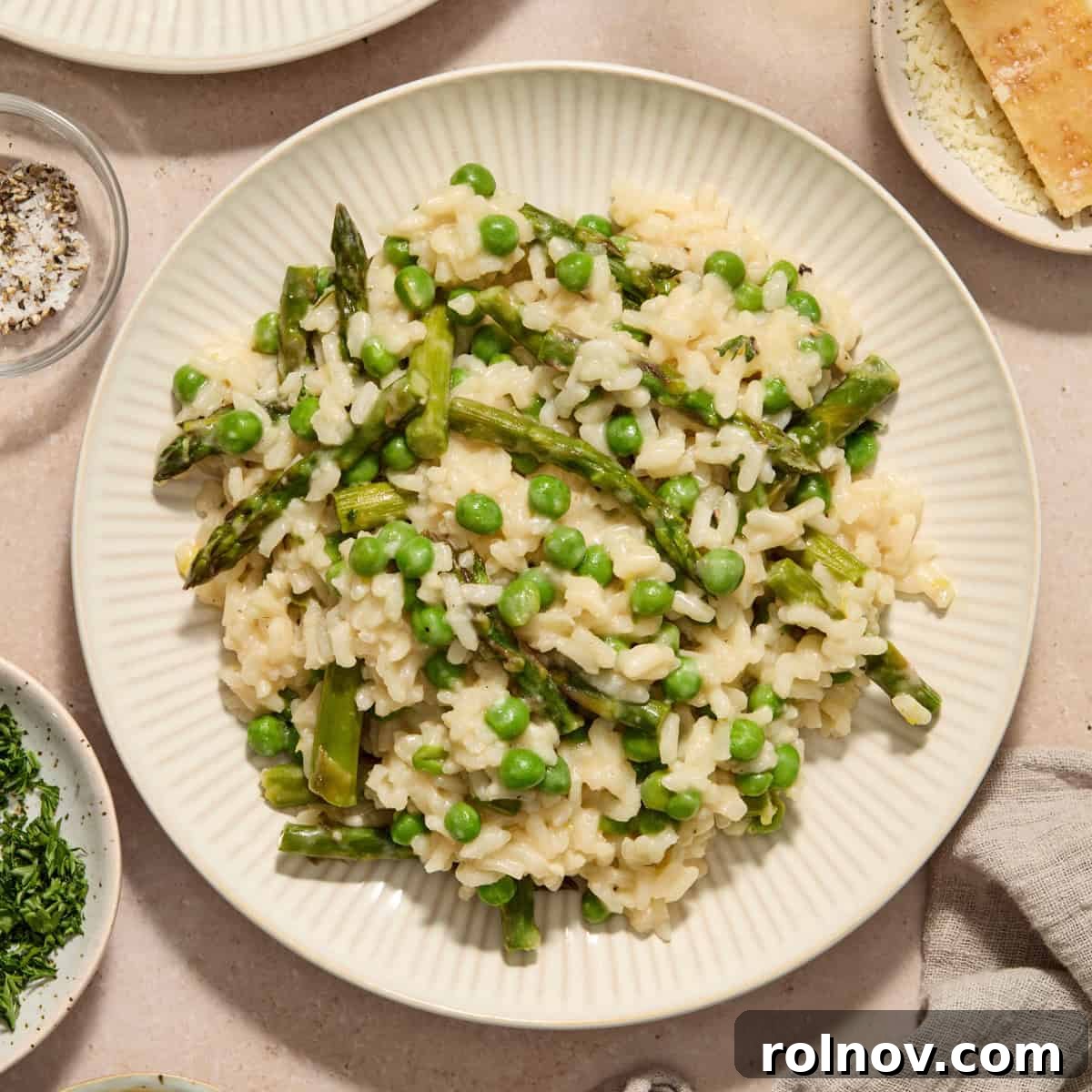
Discover the ultimate guide to creating a luscious, creamy Risotto with Peas and Asparagus, a perfect celebration of spring flavors ideal for any weeknight dinner or special occasion. This simple yet elegant recipe elevates fresh spring vegetables, with roasted asparagus adding a delightful depth of flavor and tender-crisp texture. Infused with rich Parmesan cheese, a hint of butter, and a splash of dry white wine, this comforting dish is both hearty and bursting with vibrant tastes. Get ready to master a classic that’s surprisingly easy to make and guaranteed to impress!
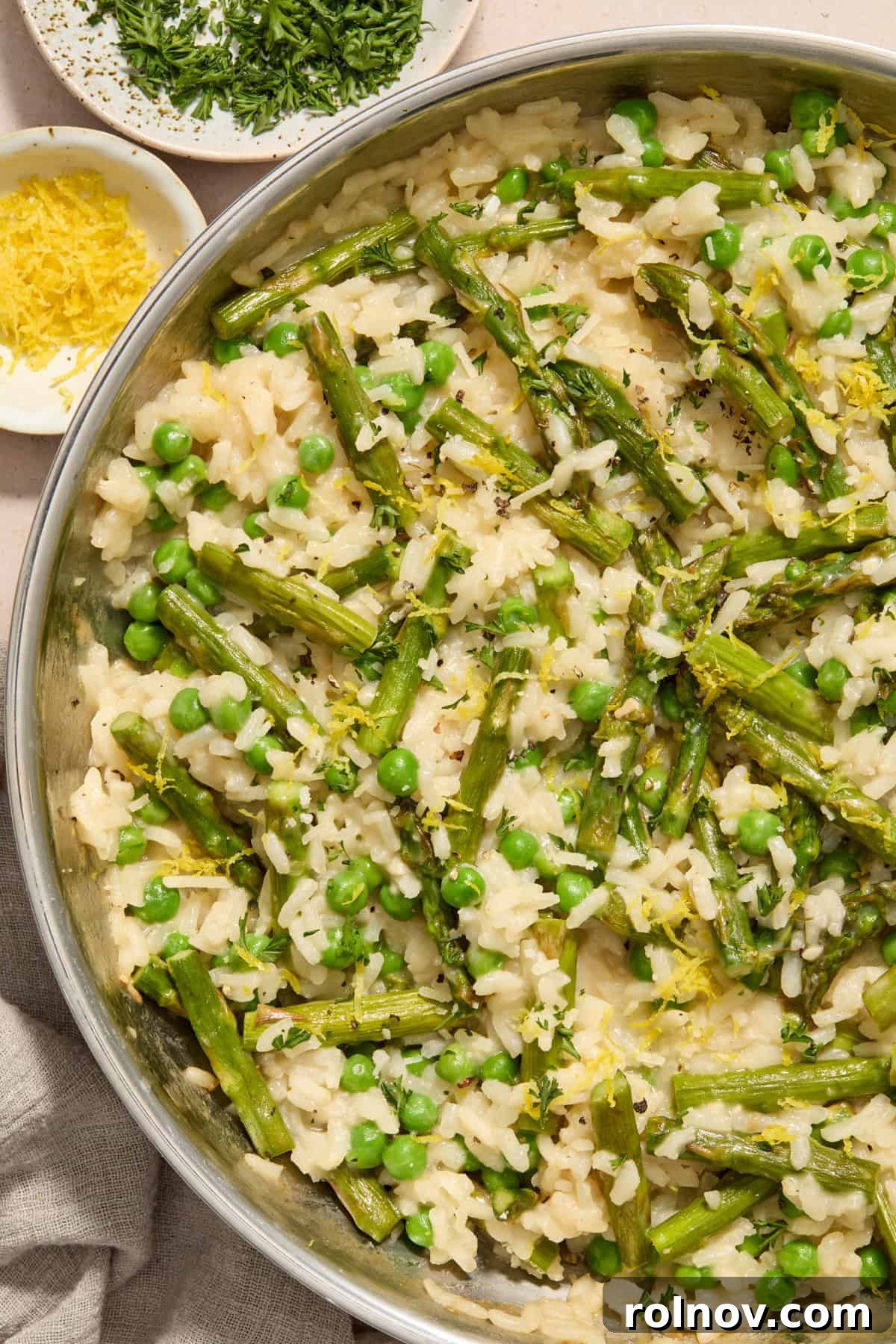
Risotto, a classic Italian rice dish, is renowned for its velvety texture and rich flavor. While often perceived as complex, making a truly outstanding risotto at home is surprisingly straightforward, especially with this easy-to-follow recipe. This particular rendition celebrates the arrival of spring by incorporating two of the season’s most beloved vegetables: tender peas and crisp asparagus. The combination creates a harmonious blend of earthy and sweet notes, making this simple dinner recipe a standout choice for warmer weather or when you crave a taste of freshness.
Don’t be intimidated by the reputation of risotto; it’s less about complicated techniques and more about patience and attention. Our spring risotto recipe takes full advantage of fresh, in-season produce, but also offers flexibility with frozen options for convenience. The result is a vibrant, comforting, and remarkably flavorful dish that feels gourmet without the fuss. If you’re a fan of spring greens, you might also enjoy this Spring Green Salad with Burrata for another light and refreshing option.
For those who adore creamy and satisfying dishes, be sure to explore other comforting recipes like our Creamy Orzo With Chicken, or for a quick and effortless meal, try the 20 Minute One Pot Lemon Ricotta Pasta. Each offers a unique spin on easy, delightful dinners that bring warmth and flavor to your table.
Why You Will Love This Creamy Pea and Asparagus Risotto:
- Packed with Fresh, Seasonal Vegetables. This risotto is a fantastic way to incorporate healthy, vibrant greens into your diet. Asparagus and peas are the stars, bringing a natural sweetness and slight crunch that perfectly complements the creamy rice. While we emphasize fresh asparagus for its distinct flavor when roasted, frozen peas are a convenient and equally delicious option, allowing you to enjoy this dish year-round. Feel free to experiment with other seasonal vegetables like sautéed mushrooms, spinach, or zucchini for added variety and nutrition.
- Features Simple, Accessible Ingredients. Beyond arborio rice, which is readily available in most grocery stores, the ingredients for this pea and asparagus risotto are kitchen staples you likely already have. This simplicity means less time shopping and more time enjoying. The core flavors come from quality broth, aromatic shallots and garlic, a dry white wine, and of course, fresh Parmesan. Even if asparagus isn’t on hand, you can still create a delicious pea risotto that’s equally comforting and satisfying.
- A Delicious and Naturally Gluten-Free Meal. Unlike pasta dishes, risotto is made with arborio rice, which is naturally gluten-free. This makes it an excellent option for individuals with gluten intolerance or those following a gluten-free diet. It offers the same comforting, satisfying experience as a pasta dish without any dietary concerns, ensuring everyone at your table can enjoy a wholesome and flavorful meal together.
- Incredibly Versatile as a Main or Side Dish. One of the many beauties of risotto is its adaptability. This creamy pea and asparagus risotto can easily stand alone as a light yet fulfilling main course, especially when paired with a fresh salad or crusty bread. Alternatively, it makes an exquisite side dish to elevate a variety of proteins. Consider serving it alongside elegant entrées such as White Wine Chicken, savory Lemon Dill Salmon, or even perfectly seared scallops. Its versatility makes it a go-to recipe for any occasion.
Essential Recipe Ingredients for Perfect Risotto
Below is a detailed overview of the key ingredients that make this creamy pea and asparagus risotto so special. For the full list of ingredients with precise measurements, please refer to the complete recipe card.
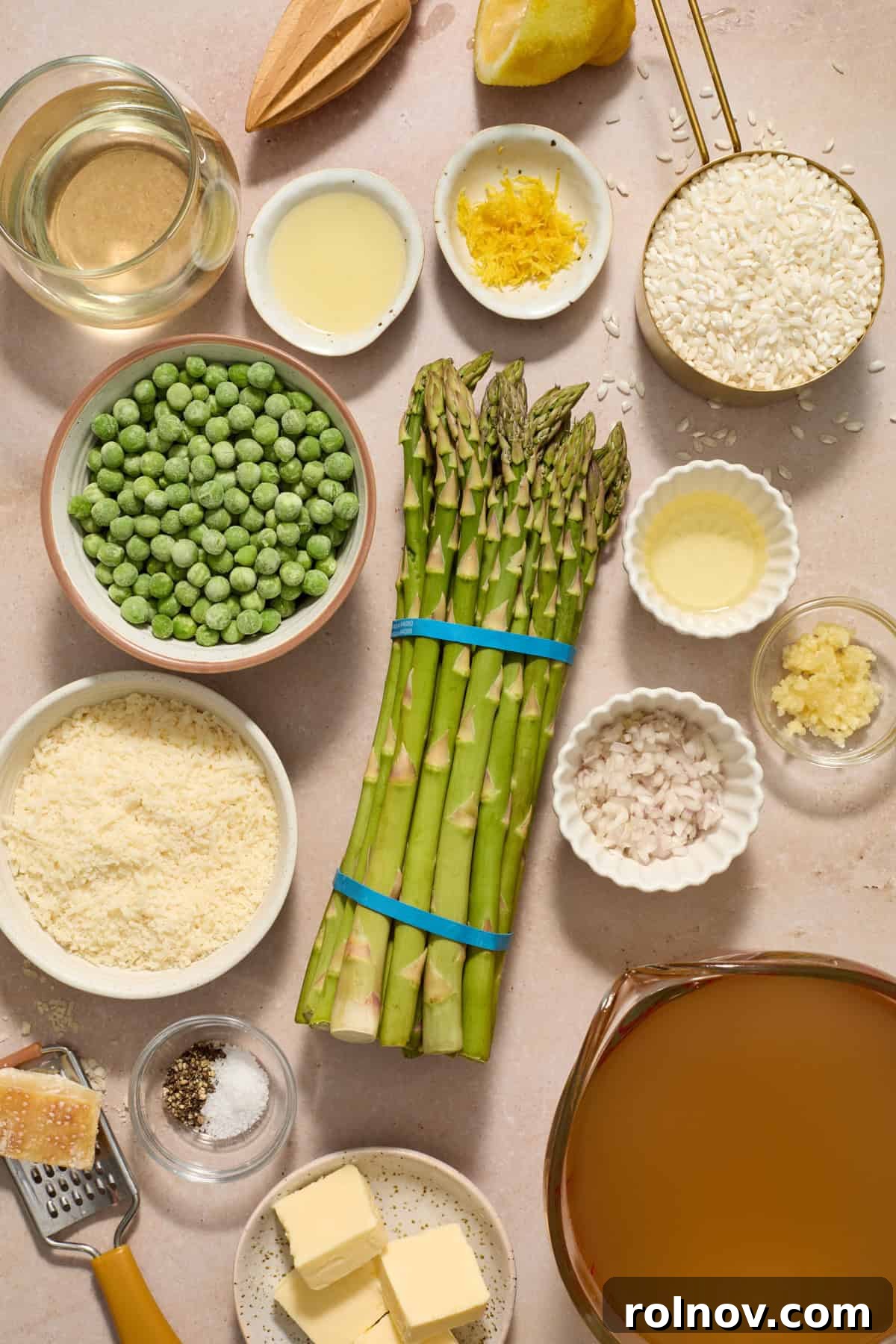
- Arborio Rice: This is the cornerstone of any great risotto. Arborio is a short-grain Italian rice known for its high starch content, which is crucial for achieving that signature creamy texture. You’ll find it in the rice or international foods aisle of your grocery store. While it may resemble pasta in its comforting appeal, it is indeed rice.
- Broth (Chicken or Vegetable): The quality of your broth significantly impacts the final flavor. I prefer using chicken broth for a richer taste, but vegetable broth works wonderfully for a vegetarian version. Opt for low or reduced-sodium broth to maintain control over the seasoning, allowing you to adjust the salt to your preference as the risotto cooks.
- Dry White Wine: A dry white wine, such as Pinot Grigio or Sauvignon Blanc, adds a layer of complexity and acidity that balances the richness of the risotto. Don’t worry about the alcohol content; it will cook out, making it safe for all ages. If you prefer to omit alcohol, a splash of white wine vinegar or additional broth can be used as a substitute, though the wine truly enhances the overall depth of flavor.
- Shallots: Shallots provide a delicate, sweet onion flavor that is more refined than traditional onions. Minced shallots form the aromatic base of the risotto. If shallots aren’t available, about a quarter cup of finely minced yellow onion can be used as a suitable alternative.
- Garlic: Freshly minced garlic adds an indispensable aromatic foundation, complementing the shallots and enhancing the overall savoriness of the dish.
- Peas: Frozen peas are my go-to for convenience and consistent sweetness. They don’t require thawing and can be added directly to the risotto towards the end of cooking. If you have access to fresh peas during spring, they are an even more delightful addition, offering a burst of pure, seasonal flavor.
- Parmesan Cheese: Freshly grated or shredded Parmesan cheese is essential for the creamy, salty, and umami-rich finish of the risotto. It melts beautifully into the rice, contributing to its luxurious texture. While pre-grated varieties can work, freshly grated Parmesan offers superior flavor and melting characteristics.
- Unsalted Butter: Butter adds richness and contributes to the silkiness of the risotto. Using unsalted butter allows you to control the salt level throughout the cooking process.
- Lemon Juice and Zest: Fresh lemon juice brightens the entire dish, cutting through the richness and adding a zesty finish. A little lemon zest at the end amplifies this fresh aroma and flavor.
- Olive Oil: Used for roasting the asparagus and sautéing aromatics, a good quality olive oil is a versatile kitchen essential.
- Salt and Pepper: Essential for seasoning and bringing out all the flavors. Always taste and adjust as you cook.
Exciting Recipe Variations to Customize Your Risotto
This pea and asparagus risotto recipe is incredibly flexible, allowing for numerous variations to suit your taste preferences or what you have on hand. Don’t hesitate to get creative and make it your own!
- Add Sautéed Mushrooms: For an earthier flavor profile, sauté sliced cremini or button mushrooms separately until golden brown, then stir them into the risotto along with the peas and asparagus. Wild mushrooms like shiitake or oyster mushrooms would also be a fantastic, gourmet addition.
- Introduce Fresh Herbs: Fresh herbs can elevate the dish significantly. Stir in chopped fresh basil, parsley, mint, or chives when you add the Parmesan cheese. Mint and peas are a classic pairing, while basil offers a fragrant, sweet counterpoint.
- Experiment with Different Cheeses: While Parmesan is traditional, a blend of Italian cheeses can add complexity. Consider using a mix that includes Pecorino Romano for a sharper, saltier kick, or Asiago for a nuttier, slightly sweeter note. You could also stir in a dollop of mascarpone at the end for an even more luxurious, ultra-creamy texture.
- Incorporate Italian Seasoning: For a subtle, herbaceous background flavor, add a teaspoon of Italian seasoning blend along with the shallots and garlic. This dried herb mixture can impart a delightful aroma without overpowering the fresh spring vegetables.
- Add Protein for a Heartier Meal: Transform this side dish into a substantial main course by adding cooked protein. Sliced and cooked chorizo offers a smoky, spicy element. Shredded rotisserie chicken or pan-seared chicken breast can be stirred in for a simple addition. Flaky salmon, pan-seared or baked, pairs beautifully with the spring vegetables. For seafood lovers, quickly sautéed shrimp added at the very end would make a delightful and elegant variation.
- Spice it Up: For a touch of heat, a pinch of red pepper flakes can be added when sautéing the garlic.
Step-By-Step Instructions for Making Creamy Risotto
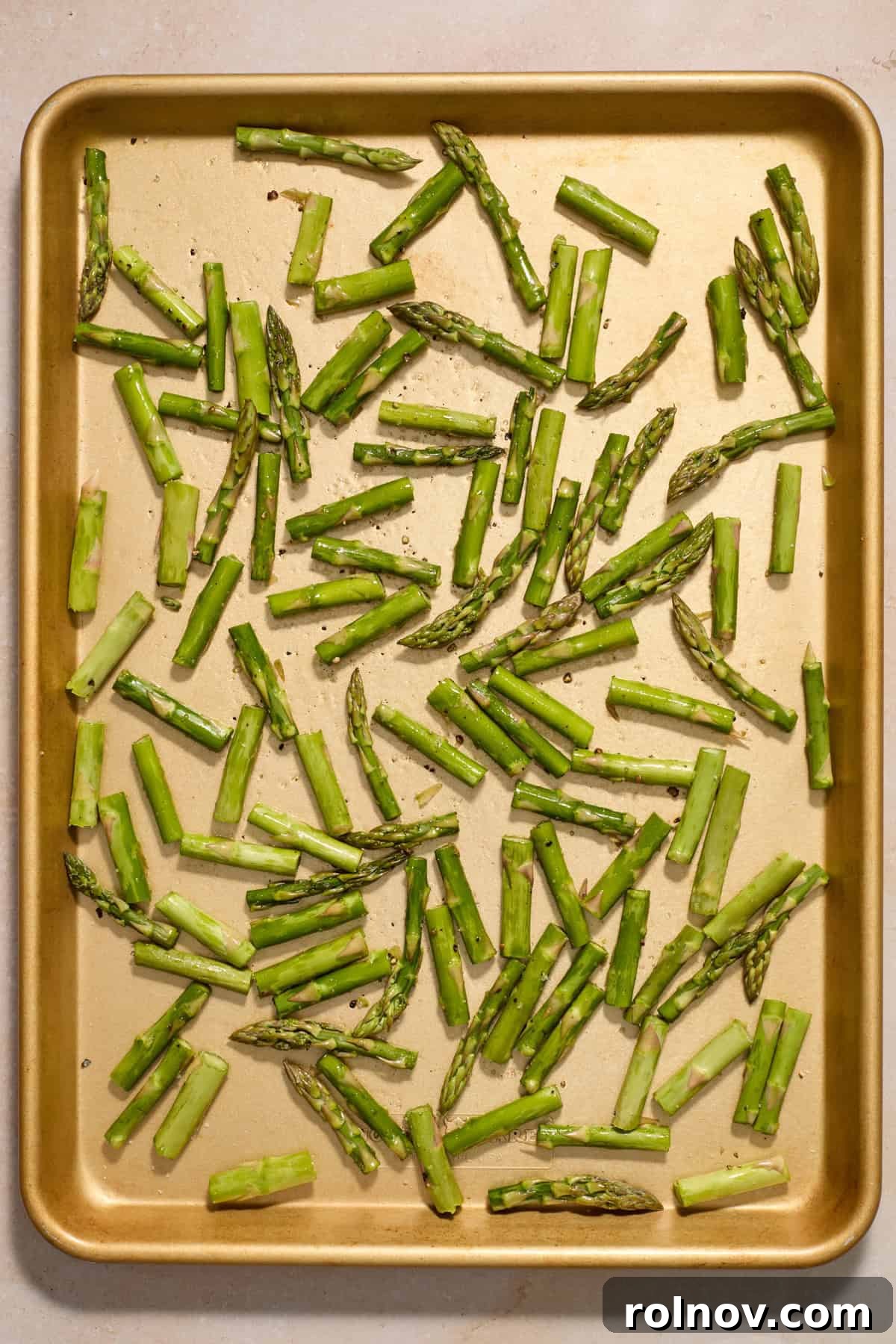
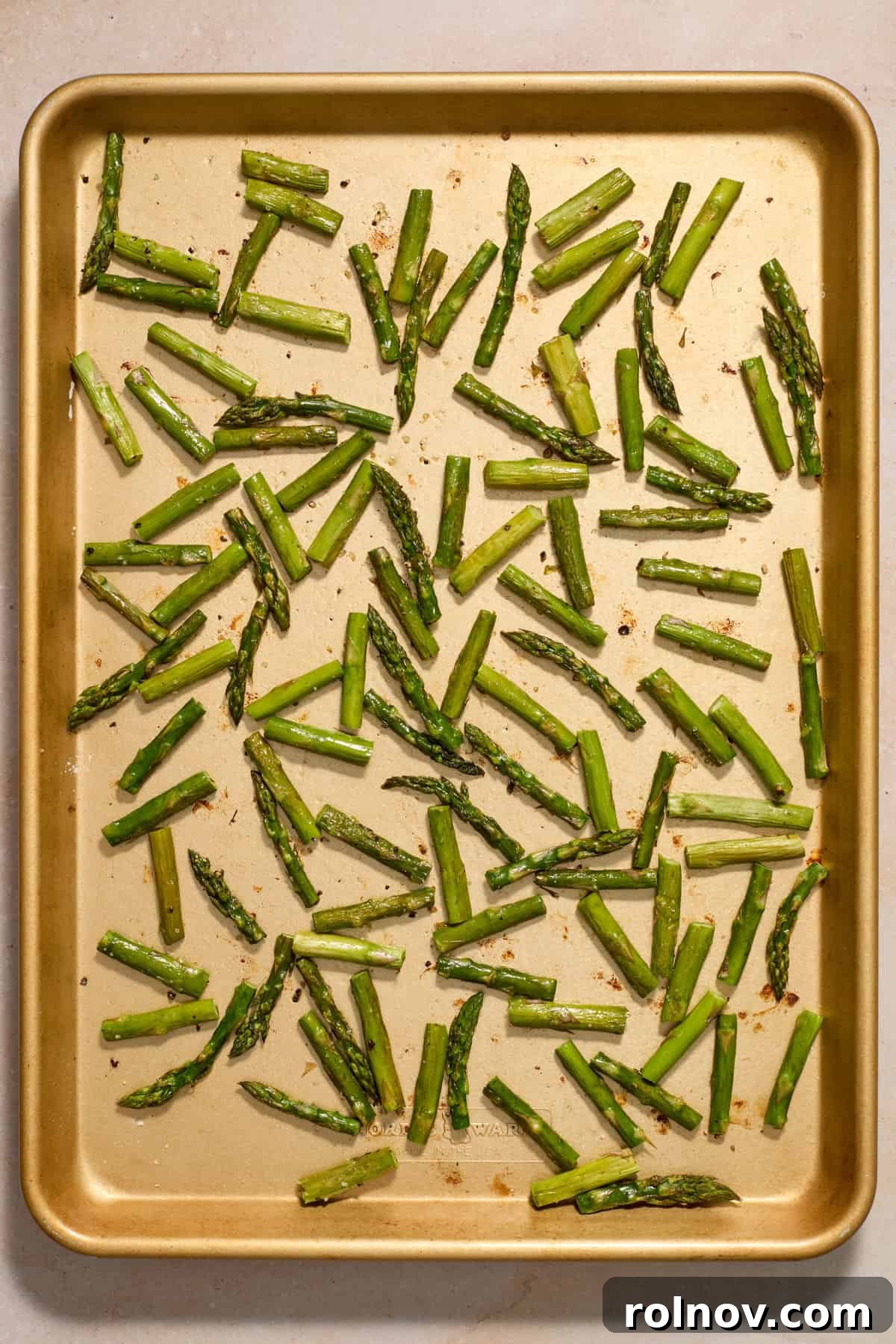
Step 1: Prepare and Roast the Asparagus. Begin by preheating your oven to 425°F (220°C). Wash the asparagus thoroughly, then snap off the tough, woody ends. Chop the tender spears into bite-sized, 1 to 1.5-inch pieces. Place the chopped asparagus on a parchment-lined baking sheet, drizzle with about 1 tablespoon of olive oil, and toss to coat evenly. Season lightly with salt, freshly ground black pepper, and a pinch of garlic powder if desired. Roast for approximately 12-15 minutes, or until the asparagus is tender-crisp and shows a slight browning on the edges. Remove from the oven and set aside.
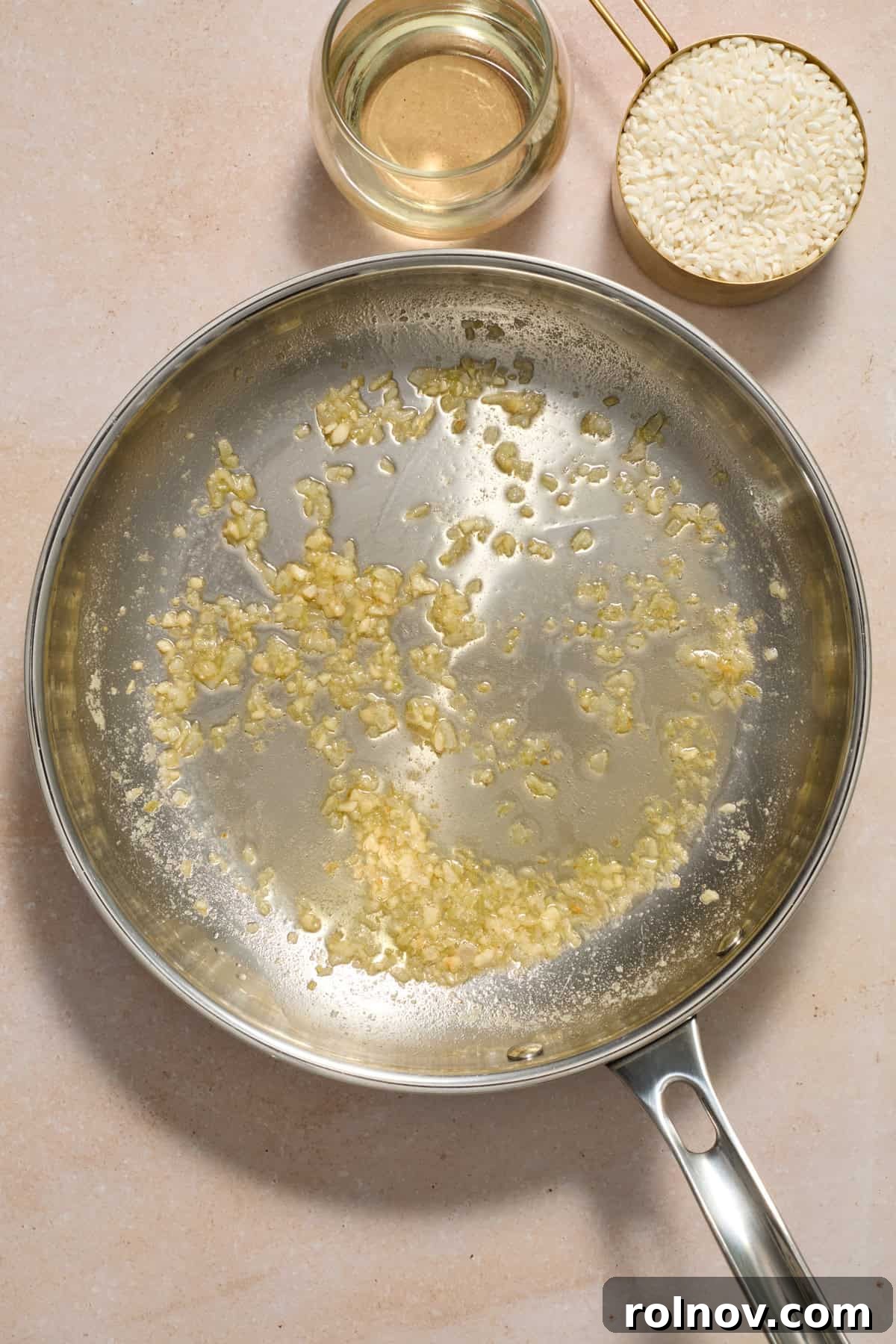
Step 2: Warm the Broth and Sauté Aromatics. While the asparagus is roasting, pour about 5 cups of chicken or vegetable broth into a medium saucepan. Heat it over medium heat until it reaches a gentle simmer; keep it warm throughout the cooking process, as adding cold broth to hot rice will cool down the risotto and disrupt the cooking. In a separate large, heavy-bottomed skillet or Dutch oven (preferably one with straight sides, about 8-10 inches in diameter) over medium heat, melt 2 tablespoons of unsalted butter. Add the minced shallot and sauté for 2-3 minutes until it becomes translucent and fragrant. Stir in the minced garlic and cook for another minute, being careful not to burn it.
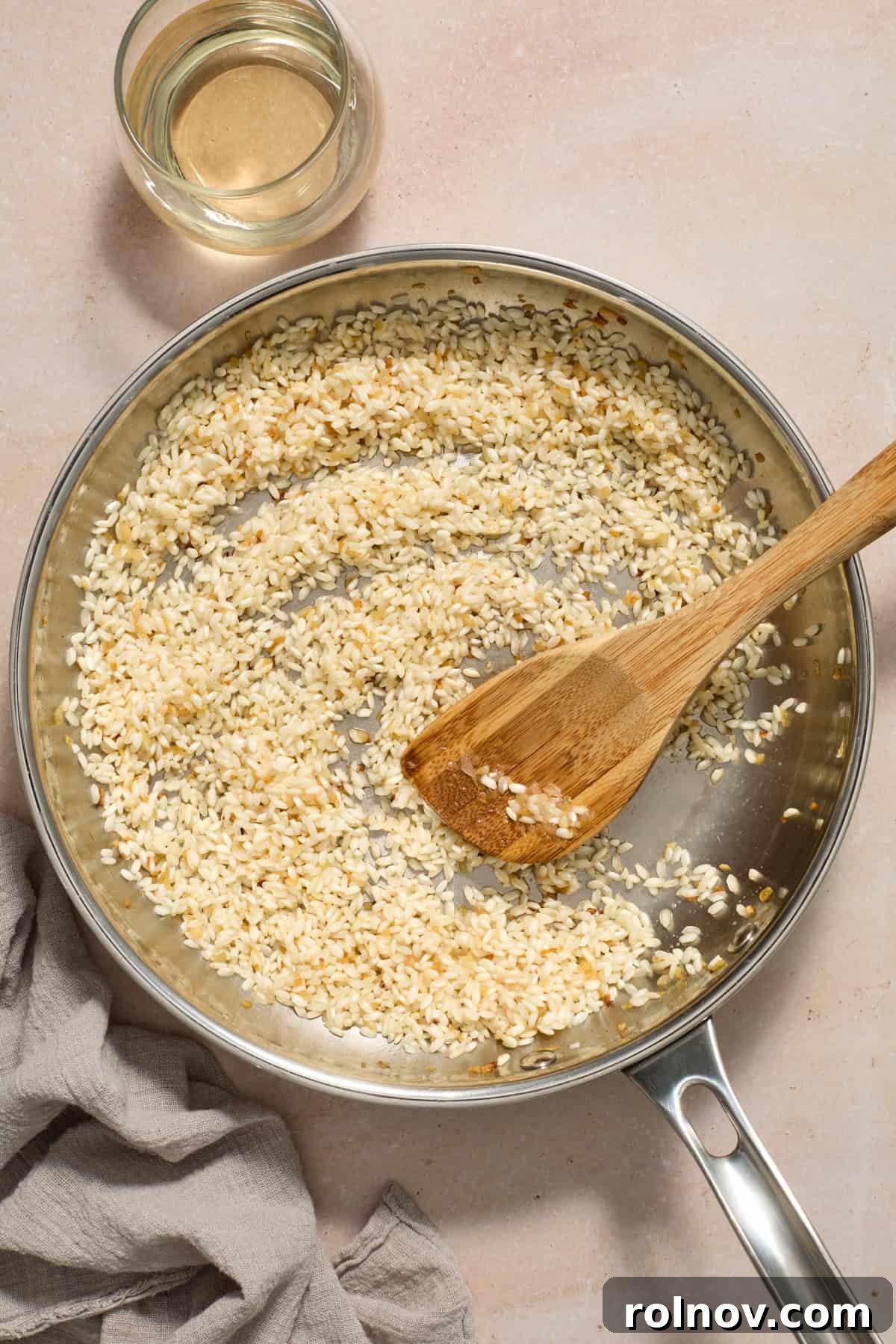
Step 3: Toast the Rice and Deglaze with Wine. Add the arborio rice to the skillet with the shallots and garlic. Stir constantly for 1-2 minutes, toasting the rice until the edges of the grains become translucent but the center remains opaque. This step, known as “tostatura,” helps the rice absorb liquid more evenly and enhances its nutty flavor. Next, pour in the dry white wine. Stir continuously, allowing the wine to completely absorb into the rice. This deglazing step adds a crucial layer of flavor and aroma, contributing to the complexity of the finished risotto.
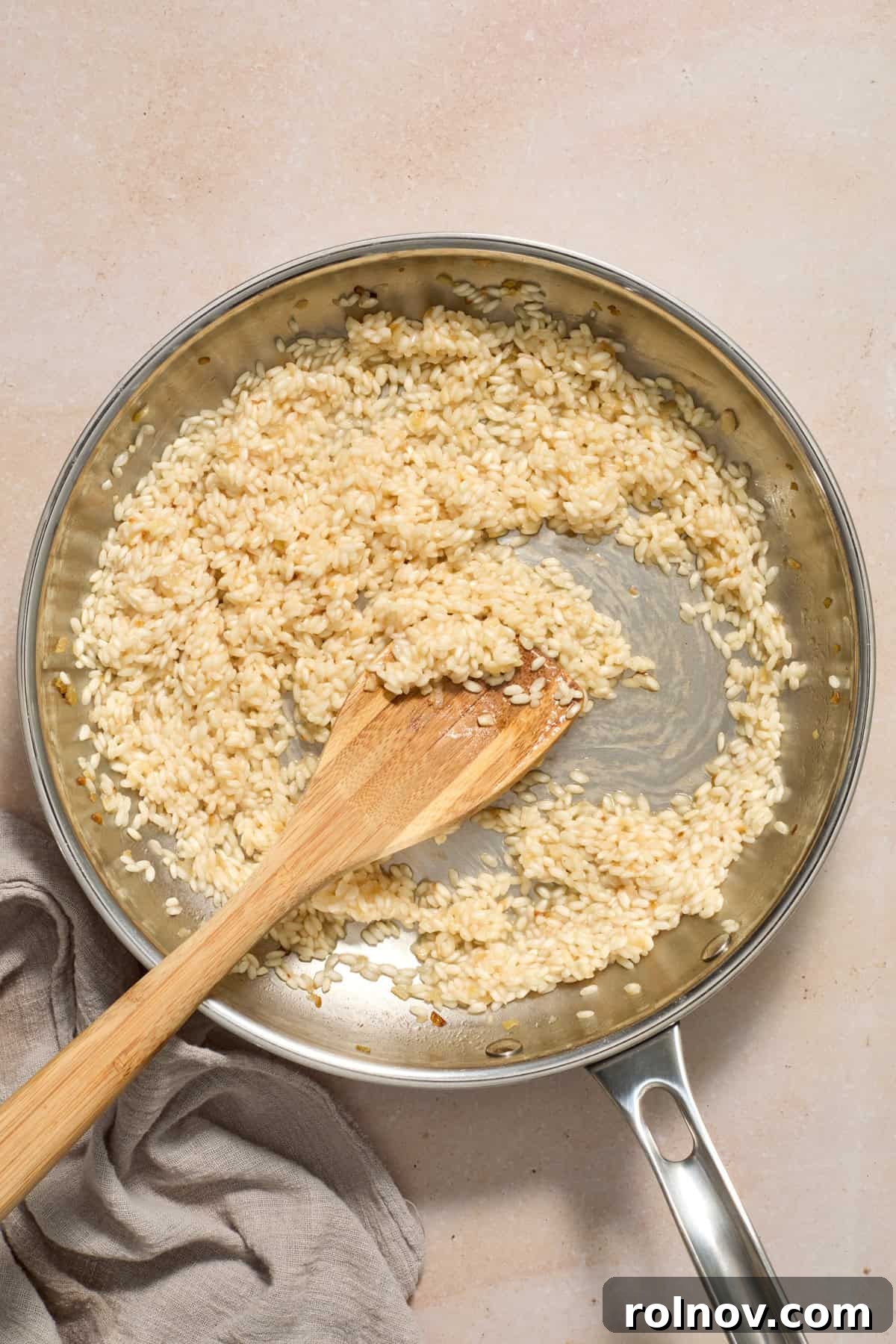
Step 4: Gradually Add Broth and Stir for Creaminess. Begin the gradual addition of the warm broth. Ladle in about one cup of the warm broth into the rice, stirring gently but consistently. Continue stirring until the liquid is almost fully absorbed by the rice. The constant stirring helps release the starch from the arborio rice, which is what creates the characteristic creamy texture of risotto. Avoid adding too much broth at once, as this can make the risotto mushy and prevent the starches from developing properly.
Step 5: Continue Adding Broth Until Al Dente. Repeat the process of adding broth, one ladleful at a time, allowing each addition to be nearly absorbed before adding the next. Maintain a steady, gentle simmer by adjusting the stove heat between medium and medium-low; the risotto should never come to a rolling boil. This gradual process usually takes about 20-25 minutes. Taste the rice frequently towards the end; it should be al dente – tender and creamy with a slight, pleasant bite in the center, not mushy or overly firm. You may not need all 5 cups of broth, or you might need a little more; the goal is the perfect texture.
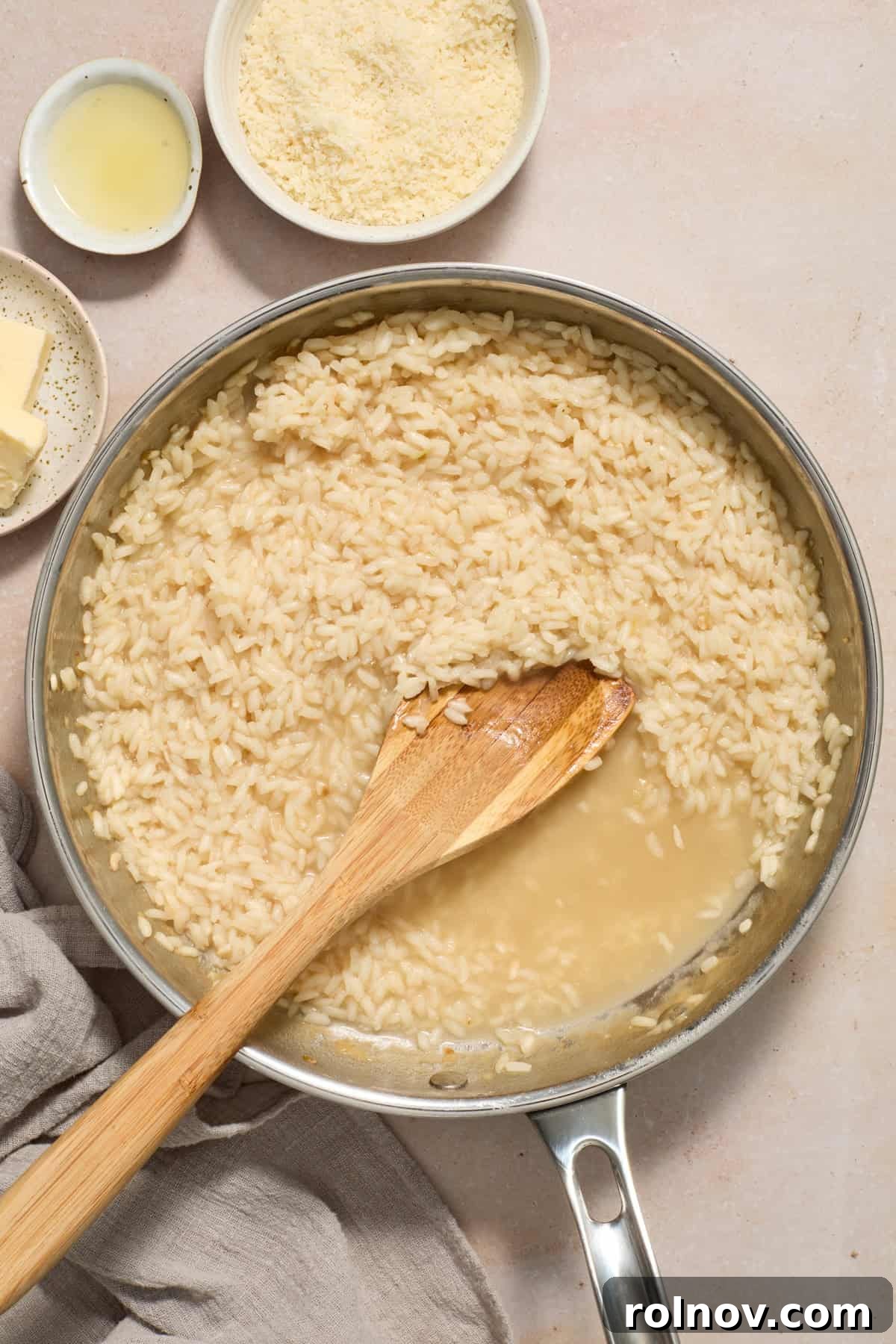
Step 6: Incorporate Finishing Touches and Spring Vegetables. Once the rice reaches the desired al dente consistency, remove the skillet from the heat. Stir in one final ladle of warm broth, the remaining 1-2 tablespoons of unsalted butter, freshly grated Parmesan cheese, and the fresh lemon juice. Stir vigorously until the risotto achieves a smooth, velvety, and incredibly creamy consistency. It should be fluid enough to spread slightly on the plate but not soupy. Finally, gently fold in the frozen peas (no need to thaw) and the reserved roasted asparagus. Continue stirring for another 1-2 minutes, allowing the peas to heat through and the flavors to meld.
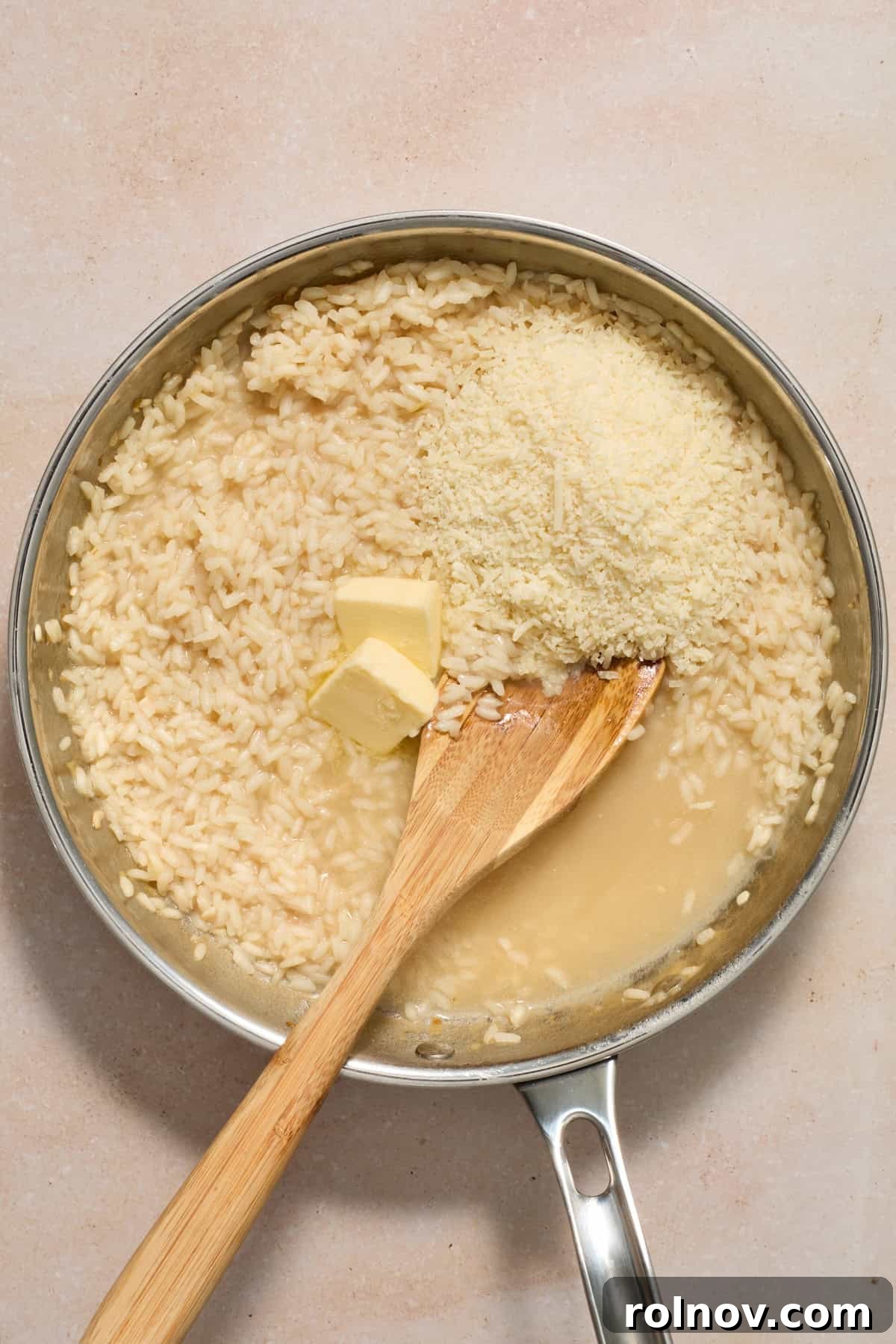
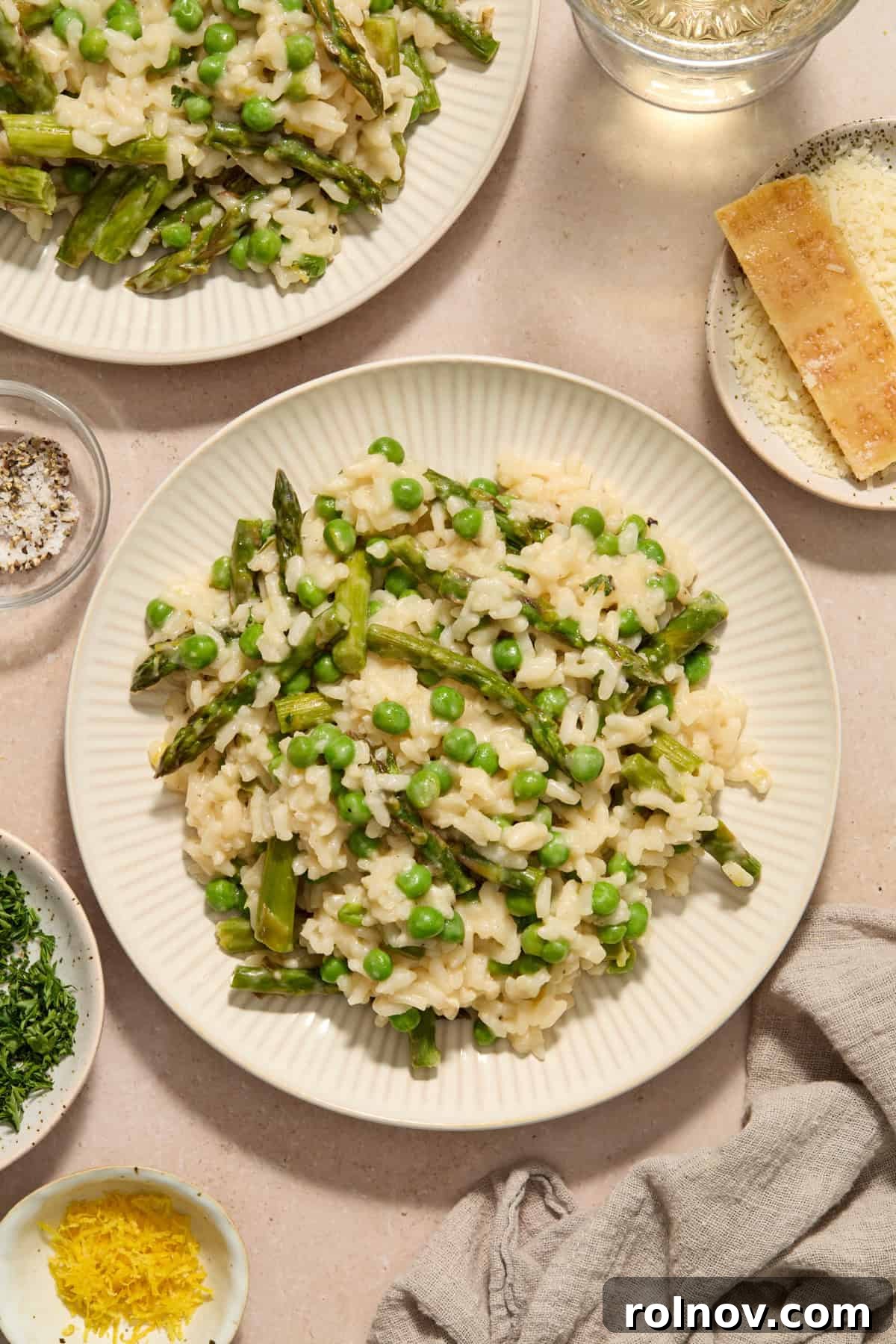
Step 7: Final Seasoning and Serving. Taste the risotto and adjust seasoning with salt and freshly ground black pepper as needed. Remember that Parmesan cheese is salty, so season carefully. Serve the creamy pea and asparagus risotto immediately in warm bowls. Garnish generously with extra freshly grated Parmesan cheese, a sprinkle of fresh chopped parsley for color and freshness, and a delicate touch of lemon zest for an aromatic finish. Enjoy this delightful celebration of spring flavors!
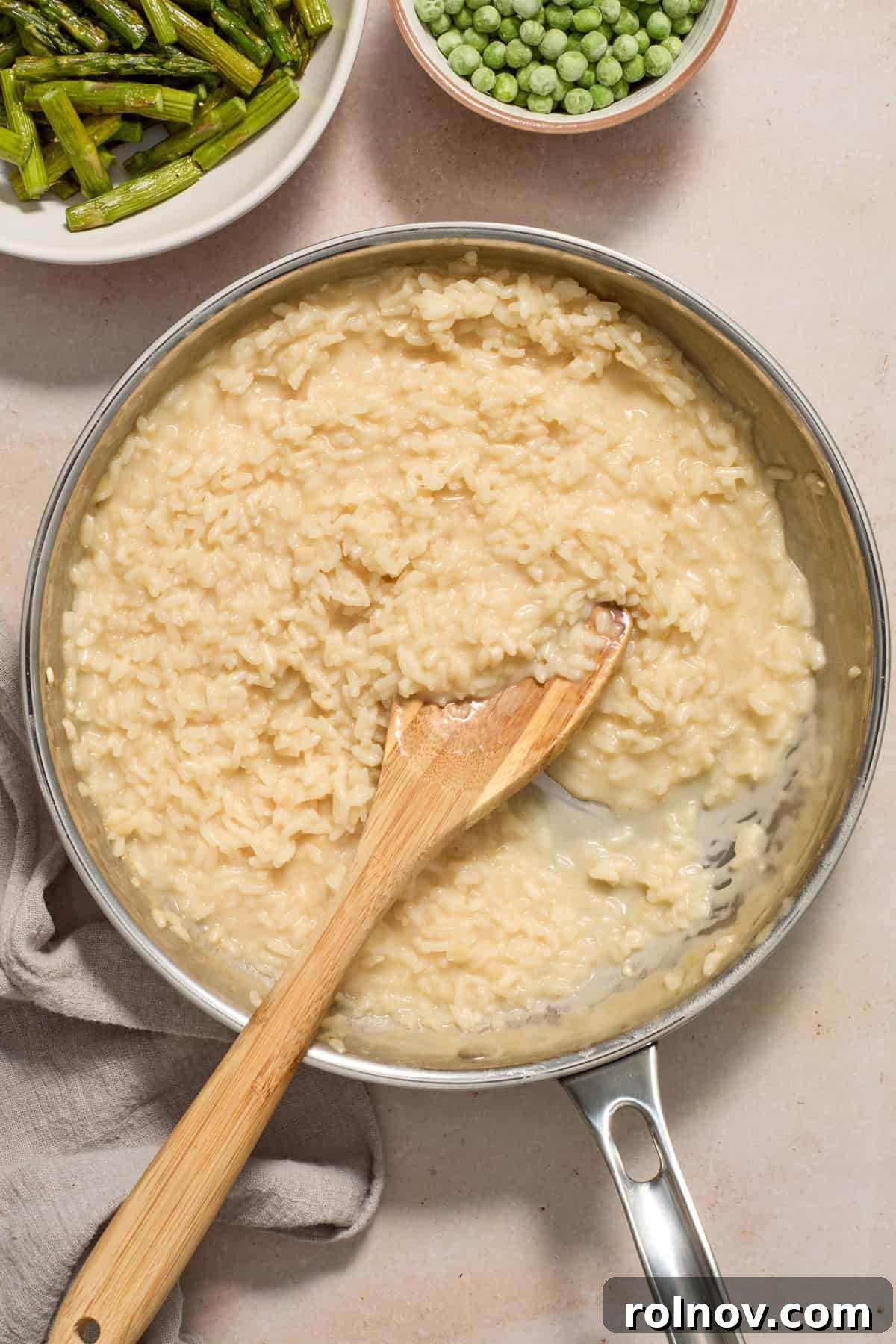
Step 8: Plate and Garnish for Enjoyment. Transfer the hot, creamy risotto to individual serving plates or a large communal bowl. The ideal consistency is a “wave” – it should spread gently and not sit in a stiff mound. A final flourish of fresh herbs, like finely chopped parsley or chives, adds visual appeal and a burst of fresh flavor. A light grating of lemon zest over the top can brighten the entire dish, enhancing the springtime essence. Serve immediately to savor its optimal texture and warmth.
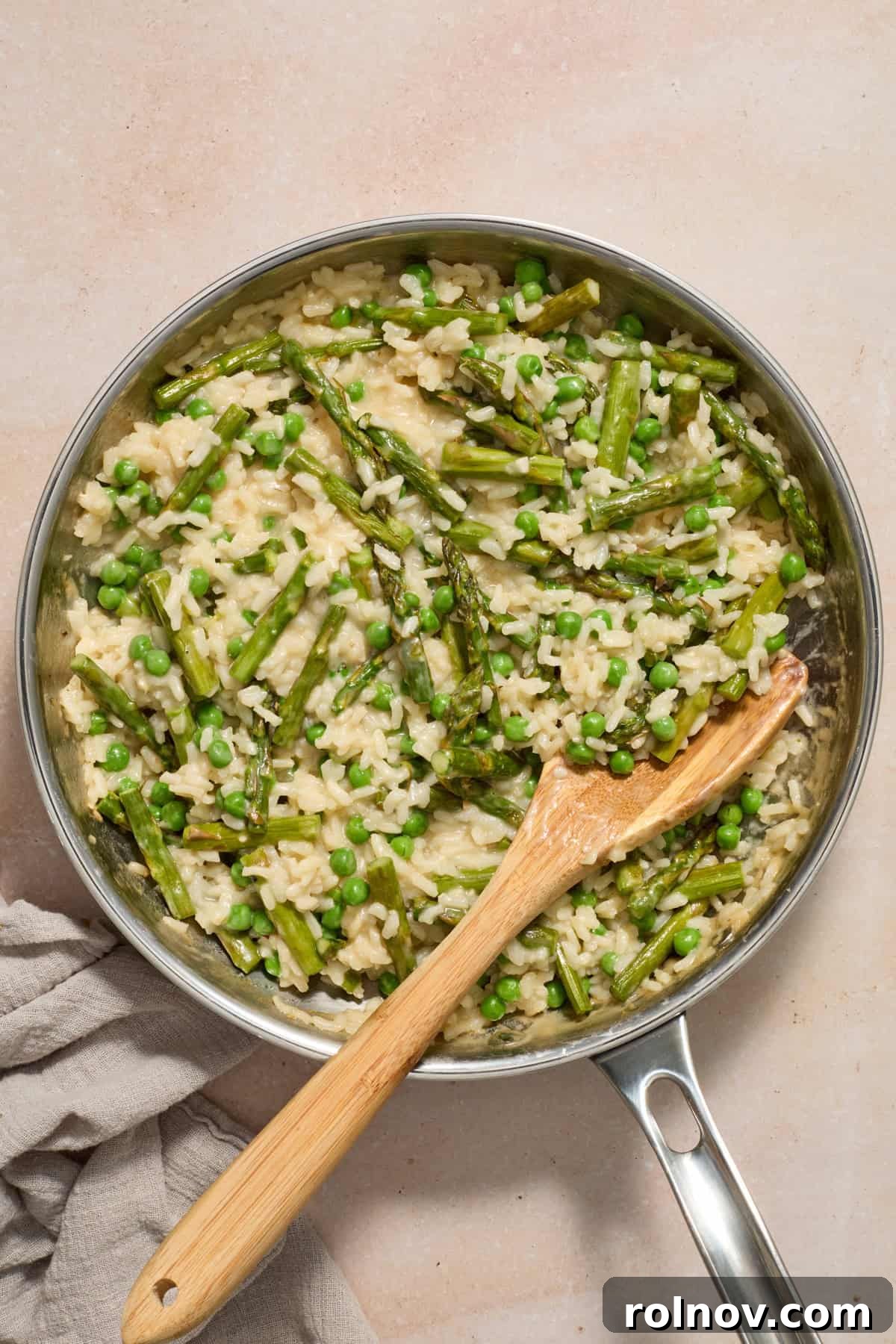
Step 9: Enjoy Your Homemade Risotto. There’s nothing quite like a freshly made, warm bowl of creamy risotto. Serve it as a comforting main course, or as an elegant side dish. Pair it with a crisp green salad and some crusty bread to complete the meal. This dish is best enjoyed right off the stove, celebrating the peak flavors and perfect creamy consistency.
Expert Tips for the Best Risotto Every Time
- Stay Attentive to the Stove: Risotto demands your presence. While it doesn’t require constant, vigorous stirring, you do need to stay close by to add broth, stir, and monitor the consistency. You definitely don’t want the risotto to come to a hard boil, which can cook the rice unevenly and create an undesirable texture. Gentle simmering is key to success. Being nearby ensures you can make timely adjustments and achieve the perfect creamy result.
- Embrace Patience and Don’t Rush the Process: The secret to truly magnificent risotto lies in patience. Resist the urge to dump in all the broth at once. Adding broth gradually, allowing each ladleful to be nearly fully absorbed before adding the next, is crucial. This method allows the rice grains to gently release their starches, building that signature creamy texture without turning the risotto mushy. Rushing this step is the most common mistake and will result in a less-than-ideal consistency.
- Always Have Extra Warm Broth on Hand: It’s always better to have too much warm broth than not enough. While this recipe calls for about 4-5 cups, the exact amount can vary depending on your rice, pan, and stove heat. I recommend warming up at least 5-6 cups to be safe. If you run out of broth mid-cooking, you can use hot water in a pinch, but for the most flavorful risotto, sticking with broth is paramount.
- Stir Regularly, But Avoid Over-Stirring: There’s a fine line with stirring risotto. You need to stir frequently to encourage the release of starches for creaminess and to prevent the rice from sticking to the bottom of the pan. However, constant, aggressive stirring can introduce too much air, which can make the risotto gluey rather than velvety. Aim for gentle, regular stirring – enough to keep things moving and creamy, but not so much that you over-aerate the rice.
- Choose the Right Pan Size: The diameter of your pan plays a significant role in risotto success. An 8 to 10-inch heavy-bottomed skillet or Dutch oven with relatively straight sides is ideal. If your pan is too wide, the rice layer will be too thin, and the liquid will evaporate too quickly, hindering the proper development of starches. A narrower pan allows the rice grains to interact more effectively with each other and the broth, leading to a richer, creamier risotto.
- Taste and Adjust Seasoning Throughout: Don’t wait until the very end to season. Taste the risotto periodically as you add the broth. This allows you to build layers of flavor and adjust salt levels, especially since broth and Parmesan cheese contribute to the saltiness.
- Serve Immediately: Risotto is a dish that waits for no one! Its creamy, flowing texture is at its peak immediately after cooking. As it cools, it will thicken. Plan to serve it as soon as it’s ready for the best possible experience.
Storage and Reheating Tips for Leftover Risotto
This pea and asparagus risotto, like most risottos, is truly at its best when served fresh off the stove. The creamy texture and vibrant flavors are most pronounced immediately after cooking. However, if you find yourself with delightful leftovers, here are some helpful tips for storage and reheating:
Store any leftover risotto in an airtight container in the refrigerator for up to 3-5 days. It’s important to cool the risotto quickly before refrigerating to maintain food safety. You’ll notice that once cooled, the risotto will become quite thick and firm, as the starches continue to set. When reheating, the key is to restore its creamy consistency.
To reheat, transfer the desired portion of risotto to a saucepan or skillet over medium-low heat. Add an extra splash of broth (chicken or vegetable) to the pan, about 1/4 to 1/2 cup per serving, stirring gently but continuously until the risotto loosens up and becomes creamy again. If you don’t have extra broth, a little milk or cream can also be used to achieve a similar luscious texture. Avoid reheating at high temperatures, as this can dry out the rice or cause it to stick to the pan. Gently warm it through until it’s heated evenly, stirring occasionally. Do not microwave if you want to maintain the best texture.
Unfortunately, risotto does not freeze well. The texture of the rice tends to change significantly after freezing and thawing, often becoming mushy and losing its desirable al dente quality. Therefore, I strongly advise against freezing this dish to preserve its quality and flavor.
Other Simple and Comforting Dinner Recipes:
If you loved this creamy risotto, be sure to check out these other easy and delicious dinner ideas that are perfect for any night of the week:
- 20 Minute Lemon Ricotta Pasta: A quick and bright pasta dish bursting with citrusy flavor.
- Tortellini Caprese Pasta Salad: A refreshing and vibrant salad featuring cheese tortellini, fresh mozzarella, cherry tomatoes, and basil.
- Green Chicken Enchiladas: Flavorful and cheesy enchiladas made with tender chicken and a zesty green sauce.
- Pumpkin Ricotta Pasta: A cozy and creamy pasta dish with the subtle sweetness of pumpkin and rich ricotta.
- Creamy One Pot Pasta: An unbelievably easy dish that cooks everything in a single pot for minimal cleanup.
- Crock Pot Creamy Chicken Pasta: A hands-off, comforting meal that comes together effortlessly in your slow cooker.
HUNGRY FOR MORE? Subscribe to our newsletter and follow us on Facebook, Instagram and Pinterest for all the latest delicious recipes and cooking inspiration!
Simple Pea and Asparagus Risotto
Lorie Yarro
This simple and delicious Spring Pea and Asparagus Risotto recipe is a fantastic weeknight dinner that packs in fresh spring vegetables. Roasted asparagus adds the perfect flavorful texture! Full of flavor with Parmesan, a touch of butter, and white wine, this dish is both comforting and veggie-packed.
10 minutes
25 minutes
45 minutes
4
Ingredients
- 1 bunch asparagus (about 3/4 pound), chopped to 1 1/2 inch pieces
- 1 T olive oil
- 4-5 c broth (chicken or vegetable)
- 3-4 T unsalted butter, divided
- 1 shallot, minced (or 1/4 cup minced onion)
- 2 garlic cloves, minced
- 1 c arborio rice
- 1/2 c dry white wine (e.g., Pinot Grigio), or more broth/white wine vinegar
- 2 tsp lemon juice
- 1/2 c grated Parmesan, plus more for topping
- 1 c frozen peas
- Salt and freshly ground pepper to taste
- Lemon zest, as desired for garnish
Instructions
- Preheat oven to 425°F (220°C). Toss chopped asparagus with 1 T olive oil and season with a dash of salt, pepper, and garlic powder if desired. Roast for about 12-15 minutes, until tender-crisp and lightly browned. Remove from oven and set aside.
- Warm about 5 cups of broth in a saucepan over medium heat until it reaches a gentle simmer. Keep warm throughout cooking.
- In a large, heavy-bottomed skillet or Dutch oven (8-10 inches), melt 2 tablespoons of unsalted butter over medium heat. Add minced shallot and sauté for 2-3 minutes until translucent. Stir in minced garlic and cook for another minute until fragrant.
- Add arborio rice to the skillet and stir constantly for 1-2 minutes to toast the rice until the edges are translucent. Pour in the white wine and stir until completely absorbed by the rice.
- Begin adding the warm broth, one ladleful (about 1 cup) at a time. Stir gently but consistently, allowing the broth to be almost fully absorbed before adding the next ladle. Adjust heat to maintain a constant simmer; do not boil. Continue this process for approximately 20-25 minutes, or until the rice is al dente (tender with a slight bite in the center).
- When the rice is al dente, remove from heat. Stir in one final ladle of broth, the remaining 1-2 tablespoons of butter, the 1/2 cup Parmesan cheese, and the lemon juice. Stir vigorously until the risotto is smooth, creamy, and velvety.
- Gently fold in the frozen peas and the roasted asparagus. Stir for 1-2 minutes until the peas are heated through. Taste and adjust seasoning with salt and pepper as needed.
- Serve immediately in warm bowls. Garnish with extra freshly grated Parmesan, a sprinkle of fresh chopped parsley, and a touch of lemon zest if desired. Enjoy!
Notes
- Stay near the stove at all times: Risotto requires your attention. Keep it at a gentle simmer, not a boil.
- Don’t rush the process: Patience is key. Add broth gradually, allowing each addition to absorb fully for optimal creaminess.
- Have extra broth on standby: It’s wise to have 5-6 cups of warmed broth ready, as rice absorption can vary. Broth provides the most flavor, but hot water can be used if you run out.
- Stir the risotto often, but not constantly: Regular stirring helps release starch for creaminess. Over-stirring can incorporate too much air, making it gluey.
- Use an appropriately sized pan: An 8-10 inch pan with straight sides is ideal. A too-wide pan can cause liquid to evaporate too quickly, hindering starch development.
Nutrition
Nutrition information is automatically calculated, so should only be used as an approximation.
- Calories: 402 kcal
- Carbohydrates: 55 g
- Protein: 14 g
- Fat: 12 g
- Saturated Fat: 8 g
- Polyunsaturated Fat: 1 g
- Monounsaturated Fat: 3 g
- Trans Fat: 1 g
- Cholesterol: 31 mg
- Sodium: 275 mg
- Potassium: 420 mg
- Fiber: 7 g
- Sugar: 6 g
- Vitamin A: 1495 IU
- Vitamin C: 23 mg
- Calcium: 196 mg
- Iron: 5 mg
Did you enjoy this recipe? Have a question?
Leave a comment below!
Shop Essential Tools for This Recipe:
Garlic Press
Buy Now →
Stainless Steel Pan
Buy Now →
Citrus Juicer
Buy Now →
Zester
Buy Now →