
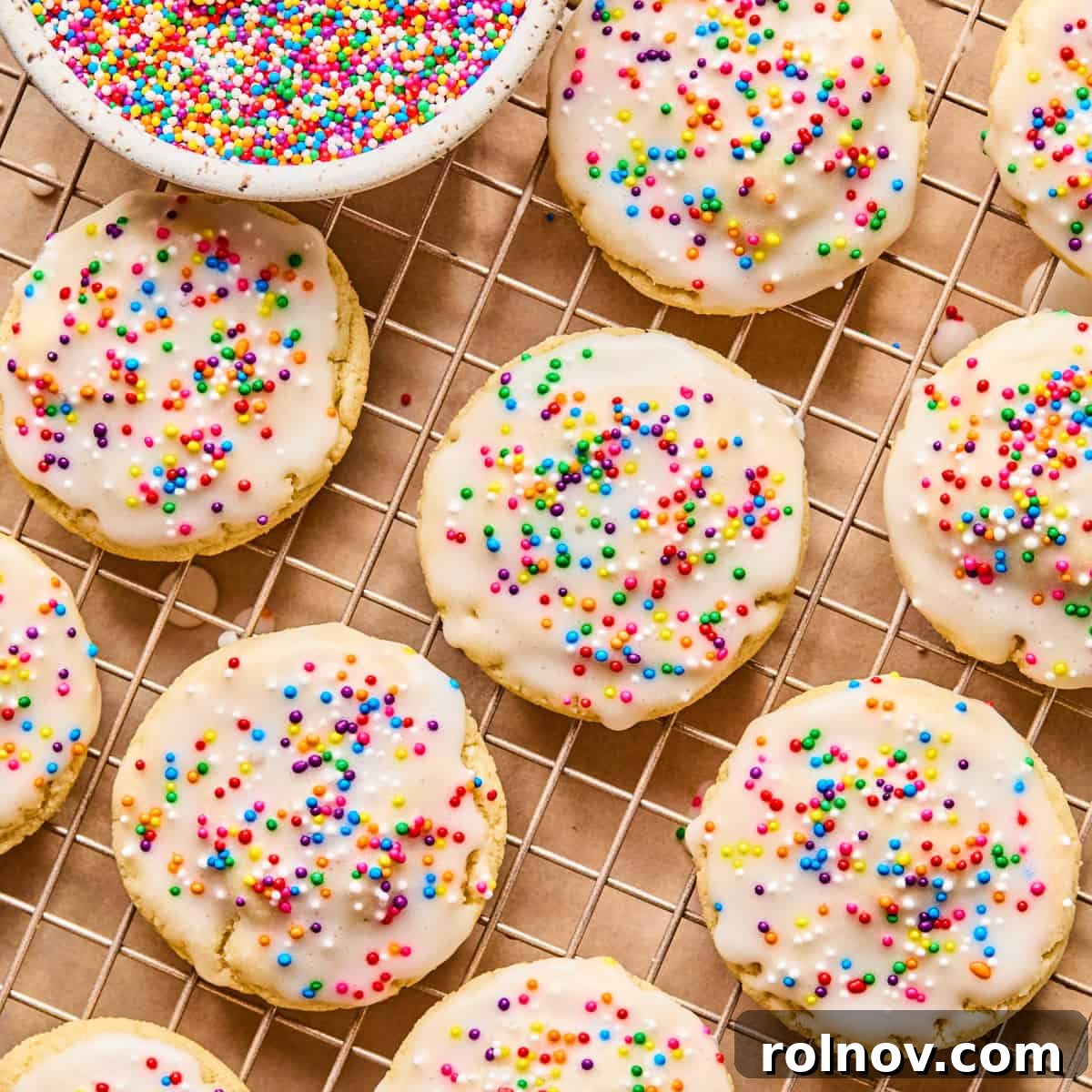
Indulge in the ultimate homemade delight with these incredibly chewy iced sugar cookies. Perfectly balancing a soft interior with a delightful chew, these cookies are a true labor of love, designed to bring joy with every bite. Featuring a straightforward, no-chill cookie dough, a burst of classic vanilla-almond flavor, and a simple yet elegant icing glaze, they’re ideal for sharing or savoring all to yourself. We enhance their charm with colorful nonpareils, adding a festive touch that appeals to all ages. This recipe yields approximately 20 cookies, a perfectly manageable batch for any occasion, ensuring fresh, delightful treats without overwhelming your kitchen.
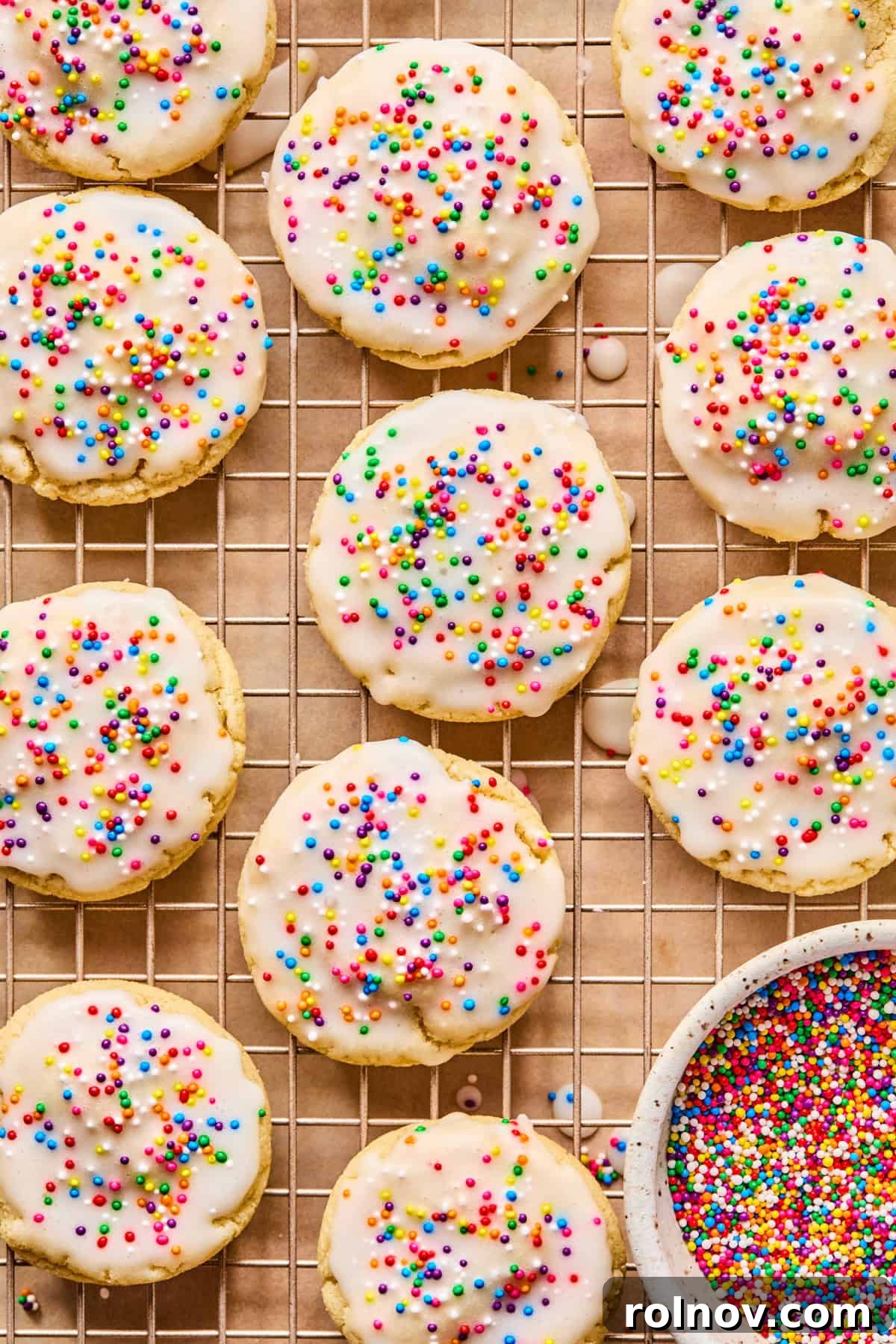
The journey to perfecting these chewy iced sugar cookies began after the unexpected popularity of my lemon sugar cookies. Many readers requested a classic sugar cookie variant, and I was determined to deliver a recipe that matched the texture and deliciousness of its lemony predecessor. What I initially thought would be a simple omission of lemon zest turned into an extensive baking experiment involving over 15 attempts! It turns out, the natural oils from lemon zest contribute significantly to the moisture content of the cookie dough, a factor I hadn’t fully appreciated. Replicating that specific soft and chewy texture in a classic sugar cookie without the lemon required careful adjustments to ingredient ratios and mixing techniques.
Through countless trials, I refined this recipe to achieve the perfect balance of softness and chewiness. The initial photos for this post were taken at an earlier stage, but I continued to tweak the formula to make it even better. So, if your cookies don’t look *exactly* like the ones in the pictures, rest assured that the refined recipe ensures an even more superior and consistent result. These cookies are not just a treat; they’re a testament to persistence and passion for baking.
If you enjoy these, you might also love exploring other delightful cookie recipes from my collection. Try the vibrant Iced Key Lime Cookies for a tangy twist, or the wonderfully tender Eggless Sugar Cookies. For something truly unique, the Pistachio Chocolate Chip Cookies offer an exquisite flavor combination. And for a truly nostalgic and rich indulgence, my current obsession is these Cosmic Brownie Cookies!
Why These Chewy Iced Sugar Cookies Stand Out

When it comes to baking, one of my ongoing challenges with most cookie recipes is the sheer volume they produce. I often find myself with 3 to 4 dozen cookies, which, while delicious, can be a bit much for everyday enjoyment or smaller households. These chewy iced sugar cookies were specifically developed to address that. They offer the perfect balance of a craveable treat without leading to an overwhelming surplus.
Perhaps you don’t mind baking large batches, and that’s perfectly fine! But for those who appreciate a more modest yield, this cookie recipe is truly a game-changer. It strikes the ideal balance, making just enough to satisfy your sweet tooth and share with a few loved ones, without leaving you with a freezer full of forgotten treats. Beyond the convenient batch size, these cookies boast an exceptional texture and are remarkably simple to prepare, making them a go-to for any occasion.
Here’s what makes these Iced Sugar Cookies truly special:
- Unbeatable Soft & Chewy Texture: The secret to their incredible texture lies in using only an egg yolk, rather than a whole egg. This simple substitution helps create a denser, chewier crumb that remains wonderfully soft, often with a delicate crinkle on top. It’s this specific characteristic that elevates them above standard, often cakey, sugar cookies.
- Small Batch Perfection: Unlike many recipes that yield an enormous quantity, this recipe is designed for a smaller batch, producing around 20 cookies. This means you won’t be whipping up three or four dozen cookies, making it ideal for smaller gatherings, gifting, or simply enjoying fresh cookies throughout the week without excess.
- Effortlessly Decorative: These cookies serve as a fantastic canvas for creativity. Their simple glaze is easy to whip up and apply, and they can be adorned with a variety of toppings, from classic nonpareils to seasonal sprinkles or even a touch of food coloring for holidays. They are a joy to decorate, making them perfect for celebrations or a fun baking project.
- Remarkably Freezer Friendly: Plan ahead or extend your enjoyment! These sugar cookies freeze exceptionally well, both in dough form and after baking and icing. This makes them perfect for make-ahead convenience, ensuring you always have a delightful treat on hand for unexpected guests or sudden cravings.
Essential Ingredient Notes for Perfect Cookies
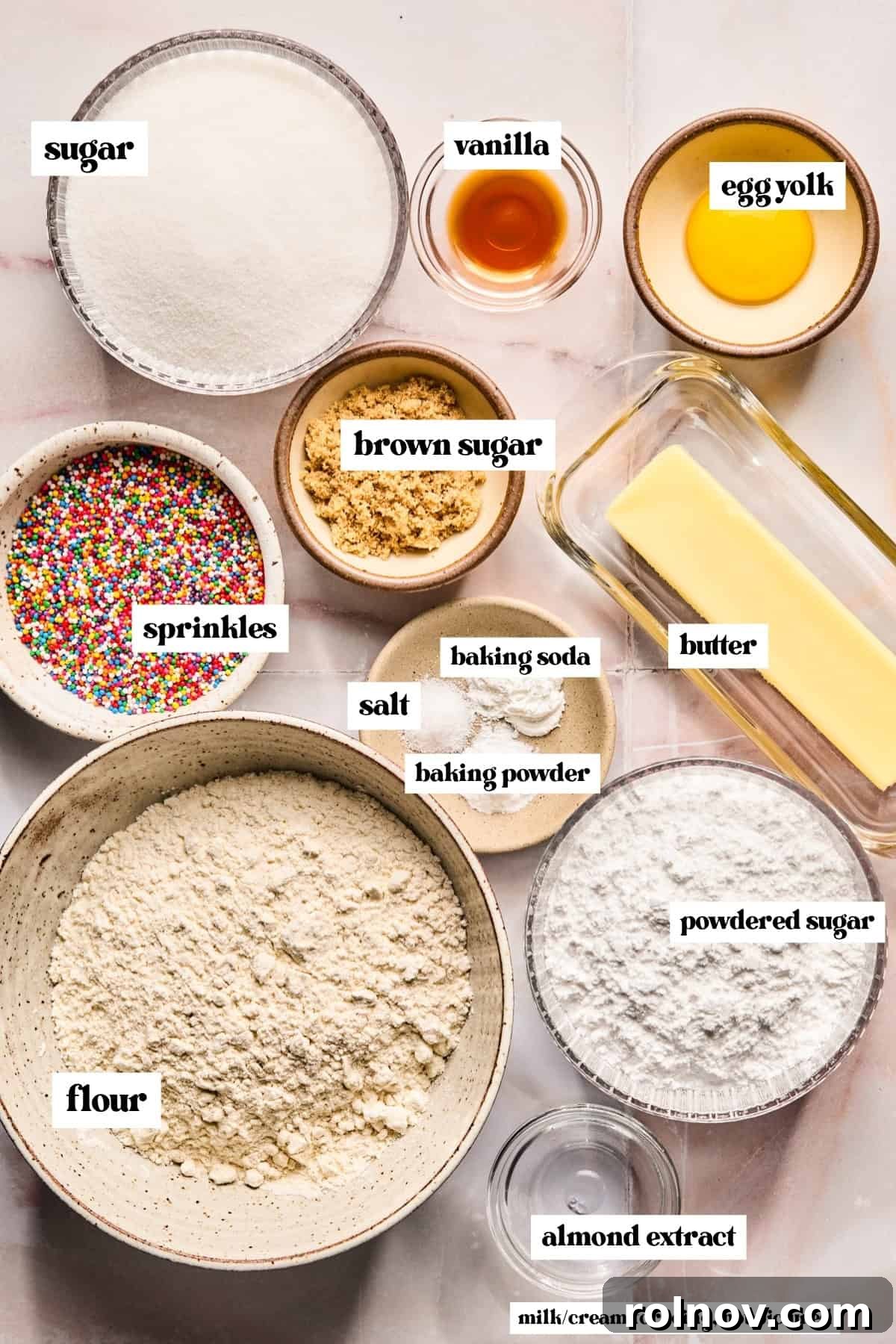
Achieving the perfect chewy iced sugar cookie hinges on understanding the role of each ingredient and preparing it correctly. Here’s a deeper dive into the key components:
- Unsalted Butter: Always use unsalted butter and ensure it’s properly softened. Softened butter should yield slightly when you gently press a finger into it, leaving a small indentation, but it should still feel cool to the touch and hold its shape. Over-softened or melted butter can lead to cookies that spread too much and become greasy. To speed up the softening process, cut cold butter into smaller cubes and let it sit at room temperature for about 30-60 minutes. Avoid using a microwave, as it can soften the butter unevenly and negatively impact the cookie’s texture. For visual guidance, refer to tips on softening butter.
- Brown Sugar: While many sugar cookies rely solely on granulated sugar, a small amount of light brown sugar is crucial in this recipe. Brown sugar contains molasses, which not only adds a subtle depth of flavor but, more importantly, contributes significantly to the chewiness and moisture of the cookies. It helps keep them soft and prevents them from drying out too quickly. Light brown sugar is preferred for its milder flavor profile compared to dark brown sugar.
- Large Egg Yolk: This is a key differentiator for the texture of these chewy sugar cookies. Using only a large egg yolk (at room temperature for best results) instead of a whole egg dramatically enhances chewiness and creates that desirable slight crinkle on the cookie surface. A whole egg would introduce more moisture and protein, leading to a more cake-like texture in the center, which isn’t what we’re aiming for here. Ensure your egg yolk is at room temperature for better emulsification with the butter and sugars, leading to a smoother, more uniform dough.
- All-Purpose Flour: Accurate flour measurement is paramount in baking, especially for cookies. For the best results, always stir your all-purpose flour to aerate it before spooning it into your measuring cup and leveling it off with a straight edge. The most reliable method, however, is to measure flour by weight using a kitchen scale. This eliminates inconsistencies that arise from packing flour too tightly or too loosely, which is often the biggest culprit behind cookies that are either too dry and crumbly or too dense and tough.
- Baking Soda and Baking Powder: These leavening agents are essential for the cookie’s rise and texture. Ensure both your baking soda and baking powder are fresh and active. Old leavening agents can lead to flat, dense, or overly spread cookies. If you’re unsure about their freshness, you can easily test them. Baking soda reacts with acidic ingredients (even a tiny bit in brown sugar or buttermilk if used) to create lift and spread, while baking powder provides consistent lift regardless of acidic content, contributing to a tender crumb.
- Granulated Sugar: Beyond its sweetness, granulated sugar contributes to the crispness of the cookie edges and helps create a tender crumb. When creamed with butter, its crystals create air pockets, contributing to the cookie’s rise and light texture.
- Vanilla and Almond Extracts: These extracts are the heart of the classic sugar cookie flavor. Vanilla extract provides a warm, comforting base, while a touch of almond extract adds a sophisticated, irresistible note that truly elevates the overall taste. Be sure to use good quality extracts for the best flavor.
Exciting Ways to Customize Your Iced Sugar Cookies
These chewy iced sugar cookies are wonderfully versatile, offering a perfect base for endless customization. Get creative and make them uniquely yours!
- Infuse Additional Flavors: While the almond extract provides a beautiful classic flavor, feel free to experiment. You could swap the almond extract for a lemon extract for a brighter, zesty note (though for a truly authentic lemon cookie experience, I highly recommend my dedicated lemon sugar cookie recipe!). Other delightful options include a touch of peppermint extract for holiday cookies, orange extract for a citrusy twist, or even a hint of rum or coconut extract for a more exotic profile. Just remember, extracts are potent, so start with a small amount and adjust to taste.
- Transform the Icing: The simple glaze in this recipe is fantastic, but the possibilities for topping your cookies are vast.
- Buttercream Frosting: For a richer, creamier topping, spread your favorite buttercream frosting over the cooled cookies. This adds a delightful richness and allows for more intricate piping designs.
- Melted White Chocolate: For a luxurious touch, dip half of each cookie into melted white chocolate. You can even drizzle contrasting dark chocolate over the white chocolate for an elegant finish. Add sprinkles while the chocolate is still wet.
- Colored Glaze: Easily add a festive touch by incorporating a few drops of food coloring into the icing glaze. This is perfect for theme parties, holidays, or matching specific decor. Think vibrant reds and greens for Christmas, pastels for Easter, or team colors for a game day treat.
- Chocolate Glaze: Whisk in a tablespoon or two of cocoa powder into the powdered sugar glaze for a chocolate version.
- Roll in Colored Sanding Sugar: If you prefer to skip the icing glaze entirely or want a simpler, sparkly finish, roll the cookie dough balls in vibrant colored sanding sugar before baking. The sugar crystals will beautifully adhere to the dough and create a glittering, crunchy crust once baked. This is an excellent option for holiday-themed cookies, like red and green for Christmas sugar cookies, or various colors for birthday celebrations. The texture contrast with the chewy interior is simply delightful.
- Add Spices: For a warm, comforting twist, consider adding a pinch of ground cinnamon, nutmeg, or even a touch of pumpkin pie spice to your dry ingredients. This will transform them into perfect autumn or winter treats.
Step-By-Step Guide to Baking Perfect Iced Sugar Cookies
Follow these detailed steps to create your batch of irresistible chewy iced sugar cookies.
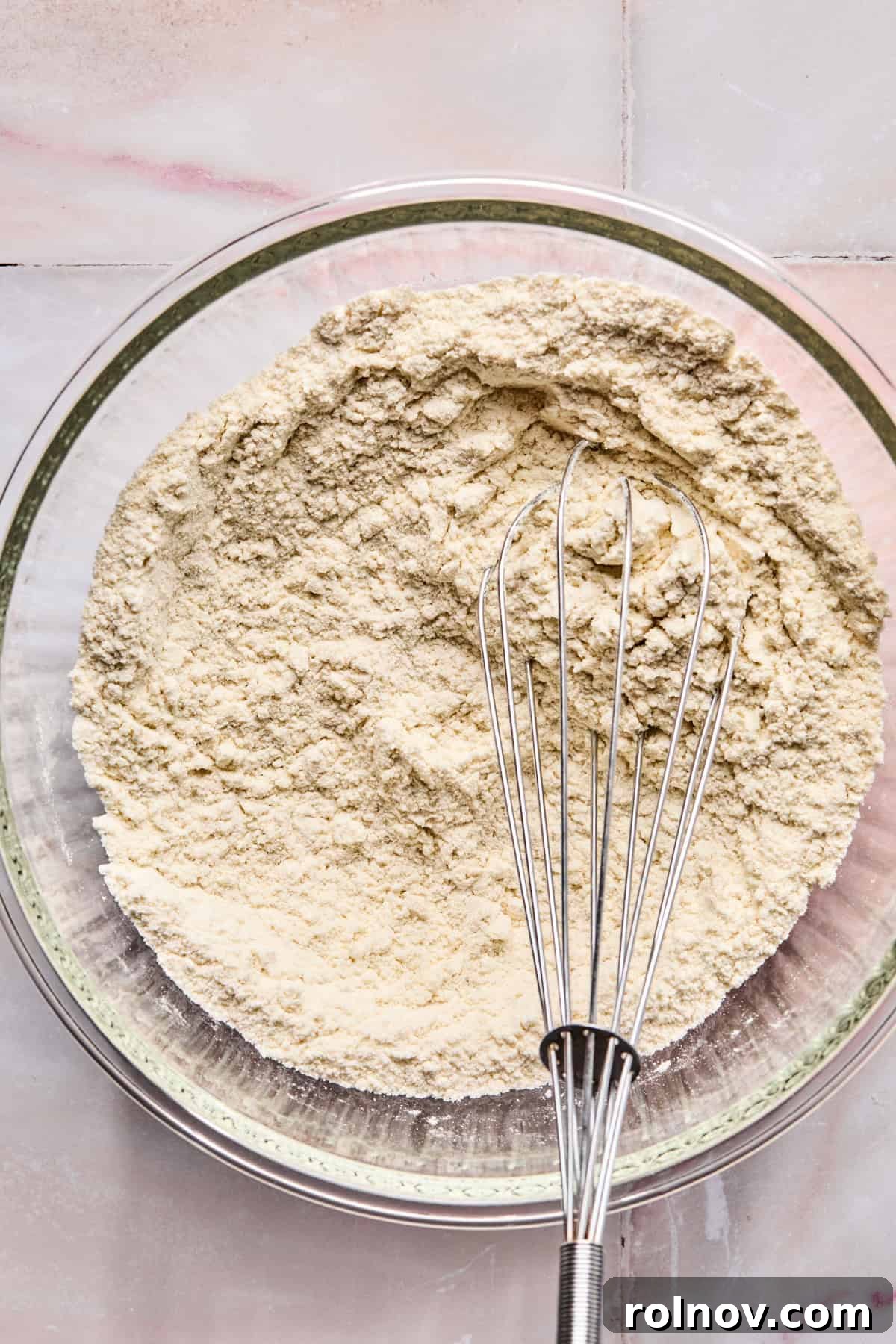
Step 1: Prepare Dry Ingredients. In a small bowl, combine your all-purpose flour, baking soda, baking powder, and salt. Whisk these dry ingredients thoroughly until they are well combined. This ensures even distribution of the leavening agents and salt throughout the dough, which is crucial for uniform rise and flavor.
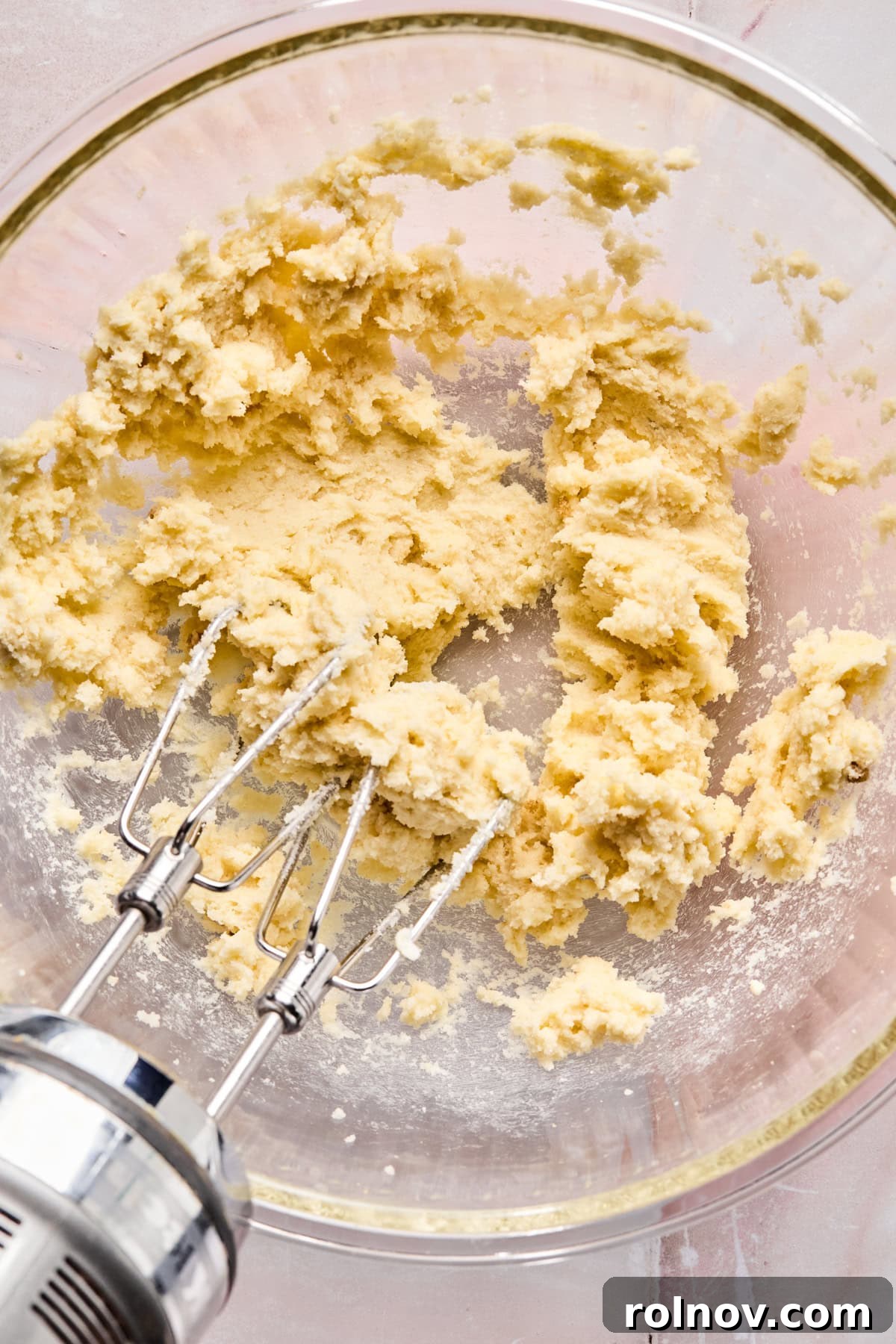
Step 2: Cream Wet Ingredients. In a medium bowl, using either a hand mixer or a stand mixer fitted with the paddle attachment, cream together the softened unsalted butter, granulated sugar, and light brown sugar. Beat on medium speed for about 2-3 minutes, or until the mixture becomes light, fluffy, and pale in color. This process incorporates air into the butter, which is vital for the cookie’s texture.
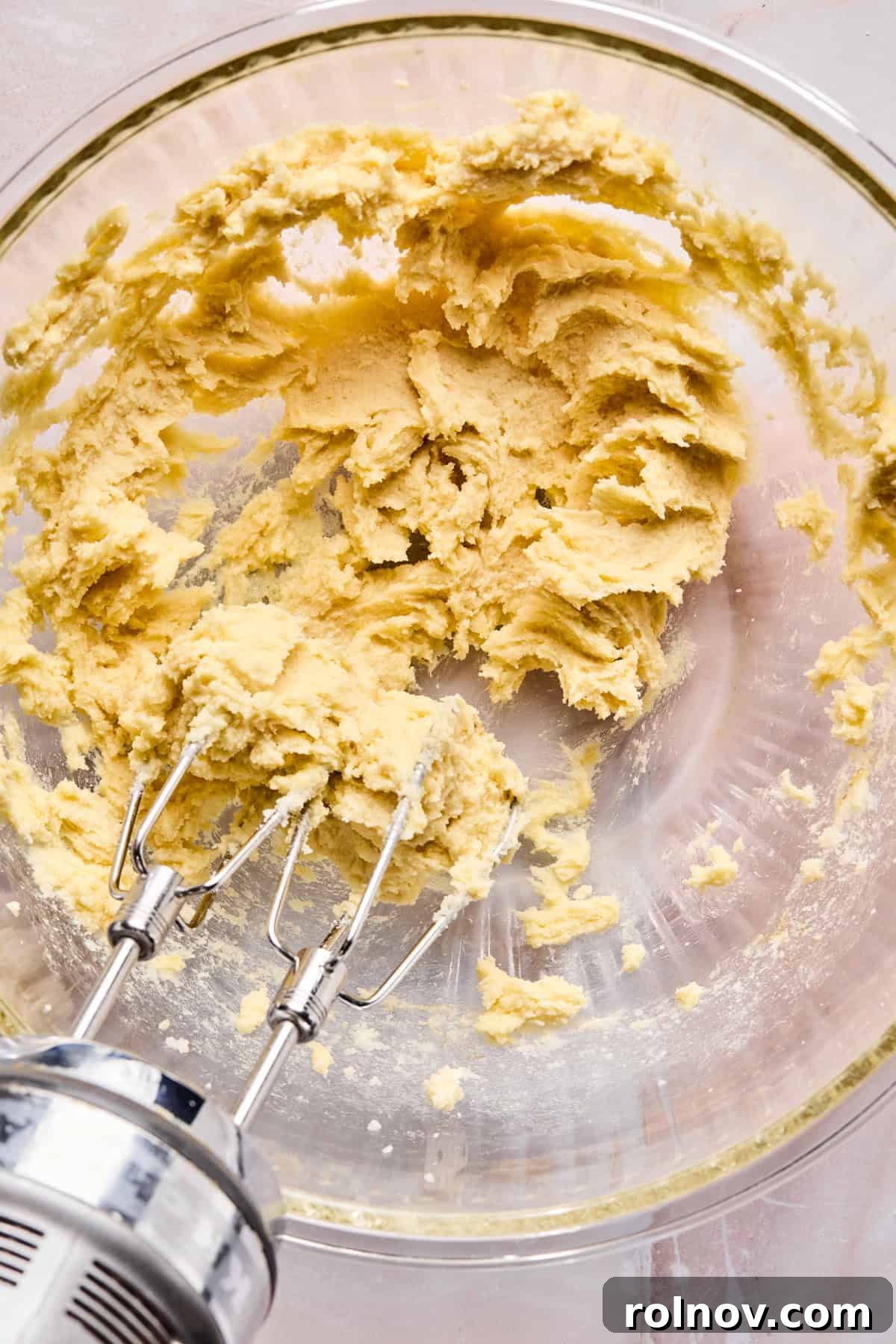
Step 3: Add Flavorings. To the creamed butter and sugar mixture, add the room temperature egg yolk, vanilla extract, and almond extract. Beat on medium speed until all ingredients are just combined and fully incorporated into a smooth mixture. Avoid overmixing at this stage to prevent developing the gluten too much.
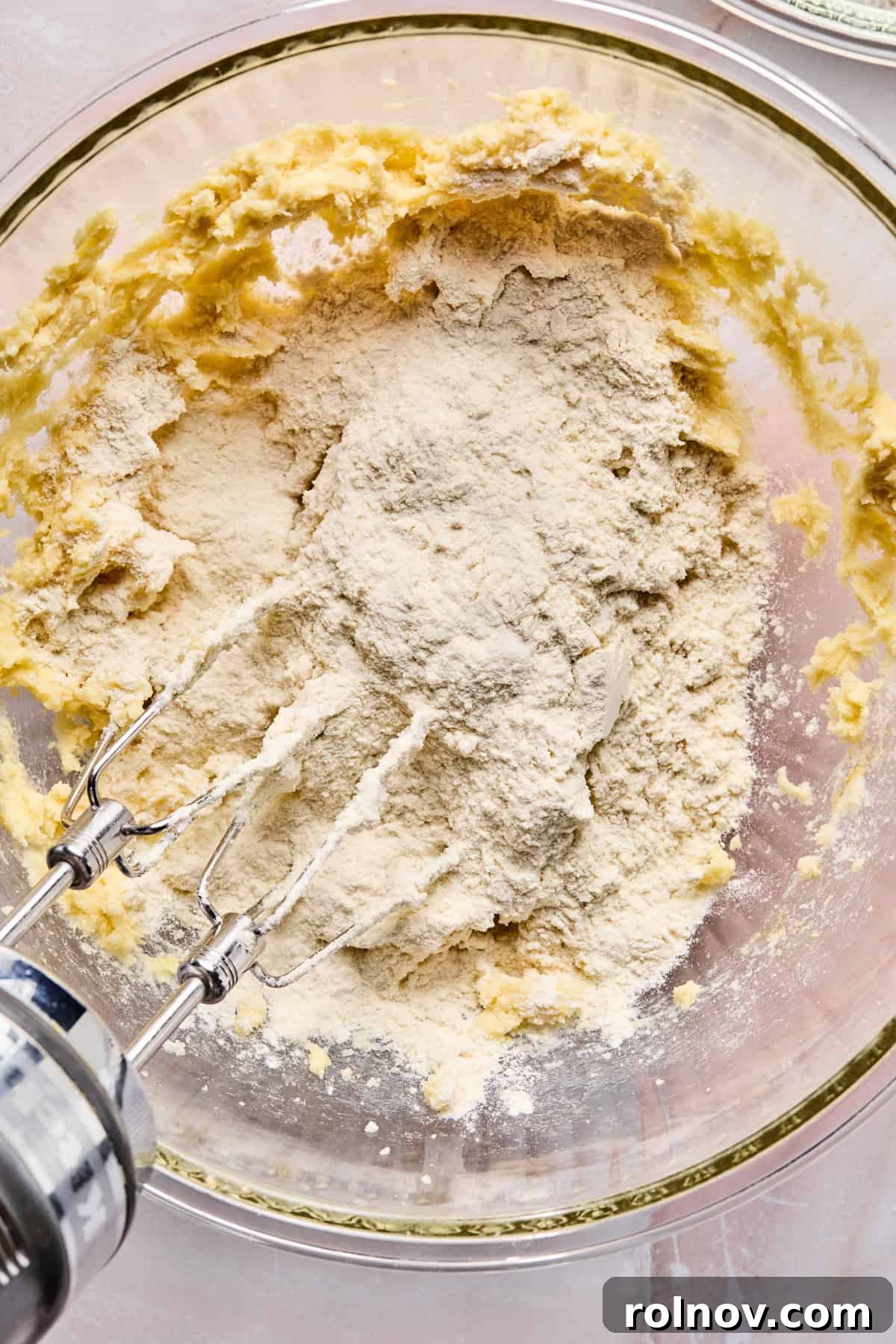
Step 4: Combine Wet and Dry Ingredients. Gradually add the whisked dry ingredients to the wet ingredients. Mix on low speed just until they are combined. It’s crucial not to overmix the dough once the flour is added, as this can develop the gluten, resulting in tough cookies. Stop mixing as soon as no dry streaks of flour are visible.
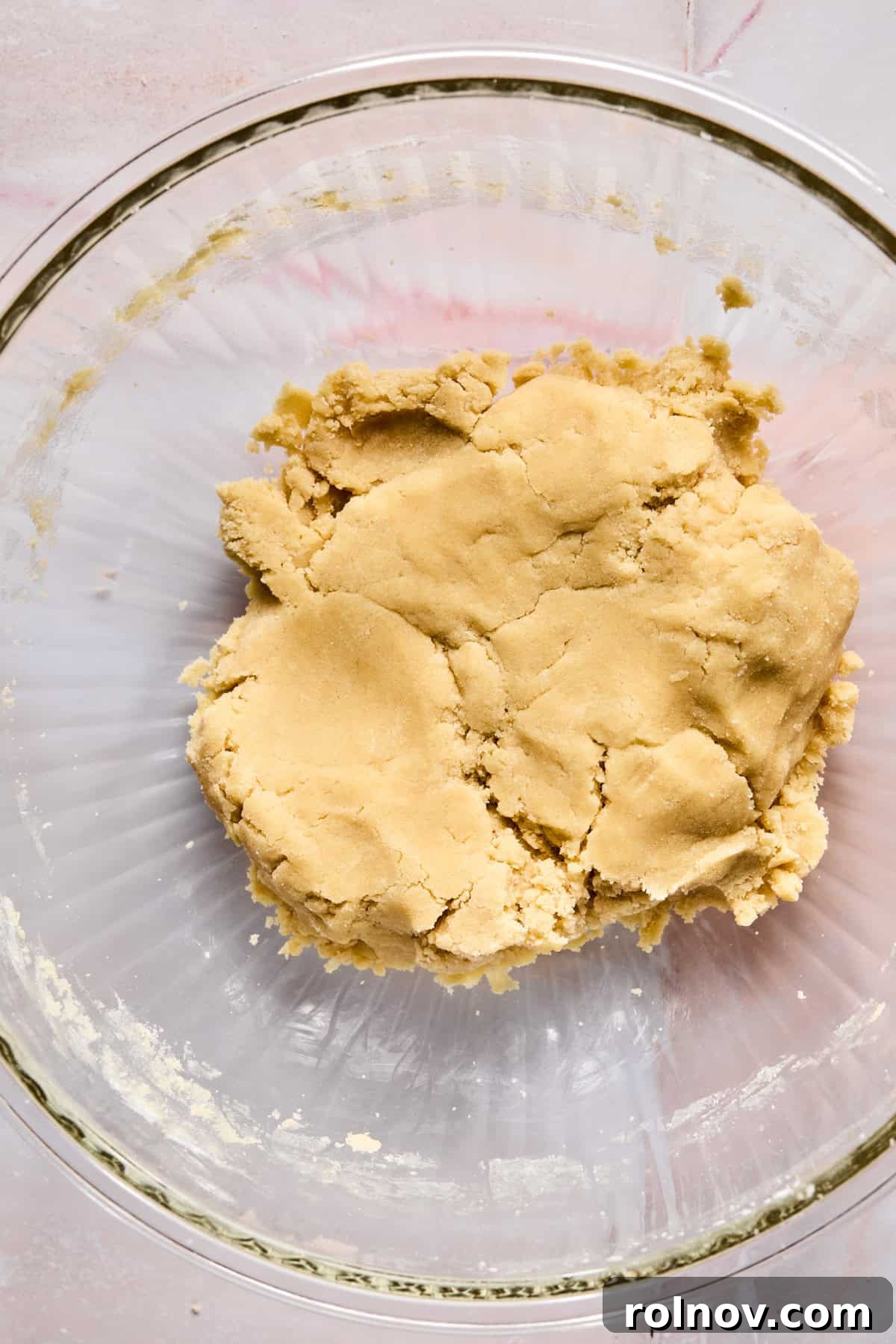
Step 5: Form the Dough. After mixing, your cookie dough might appear a bit crumbly or in several pieces. This is perfectly normal for this type of chewy cookie dough. Use your hands to gently press and pull the dough together into a cohesive mass. Do not be tempted to add more liquid; it will come together. You can lightly knead it in the bowl if necessary.
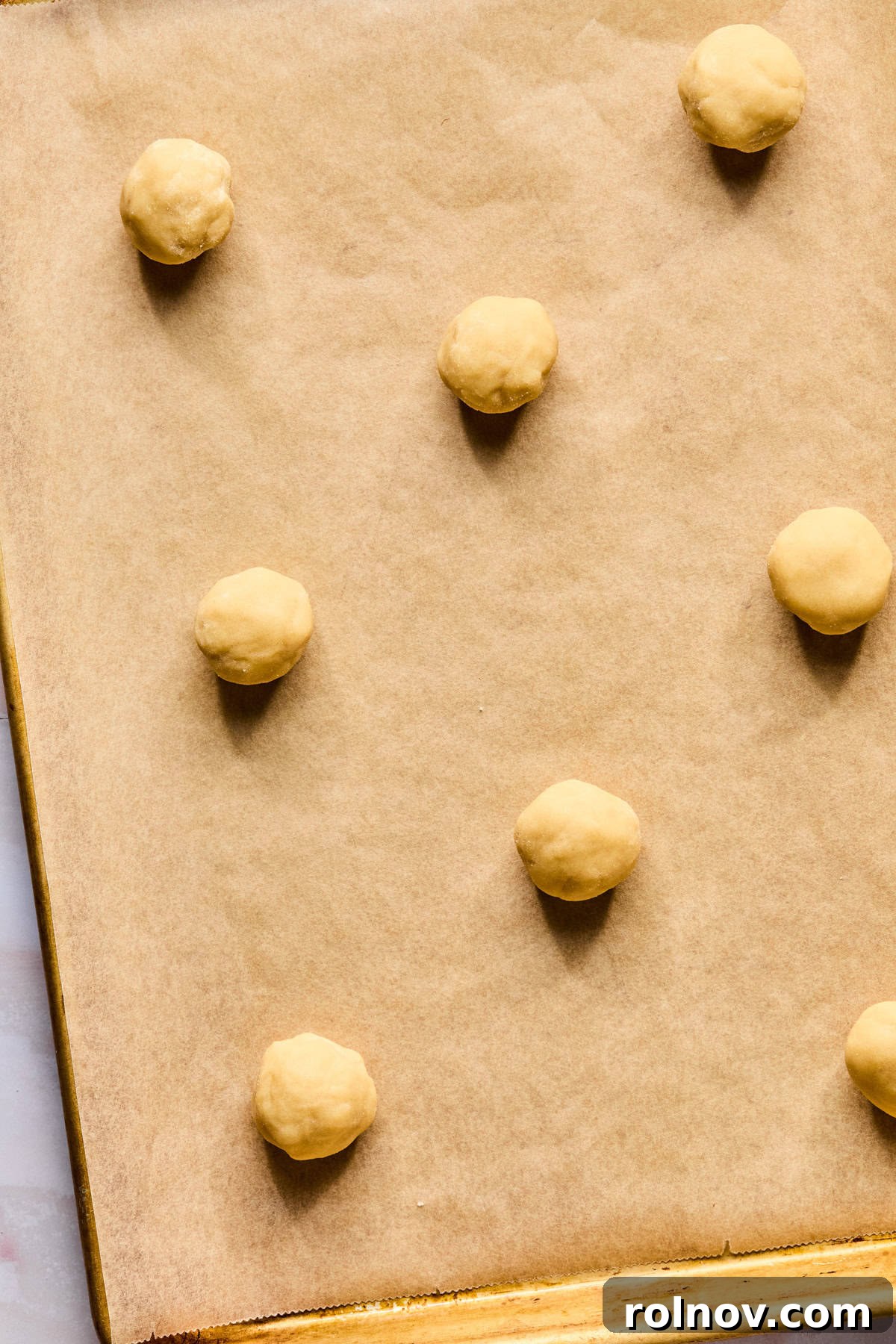
Step 6: Shape and Prepare for Baking. Roll the cookie dough into uniform balls, approximately 1 to 1½ inches in diameter. For even baking and consistent size, a cookie scoop is highly recommended. If you’re not planning to ice them later, you can roll these dough balls in granulated sugar for a sparkly finish before baking. Arrange the dough balls on a baking sheet lined with parchment paper, ensuring they are spaced about 2 inches apart to allow for proper spreading.
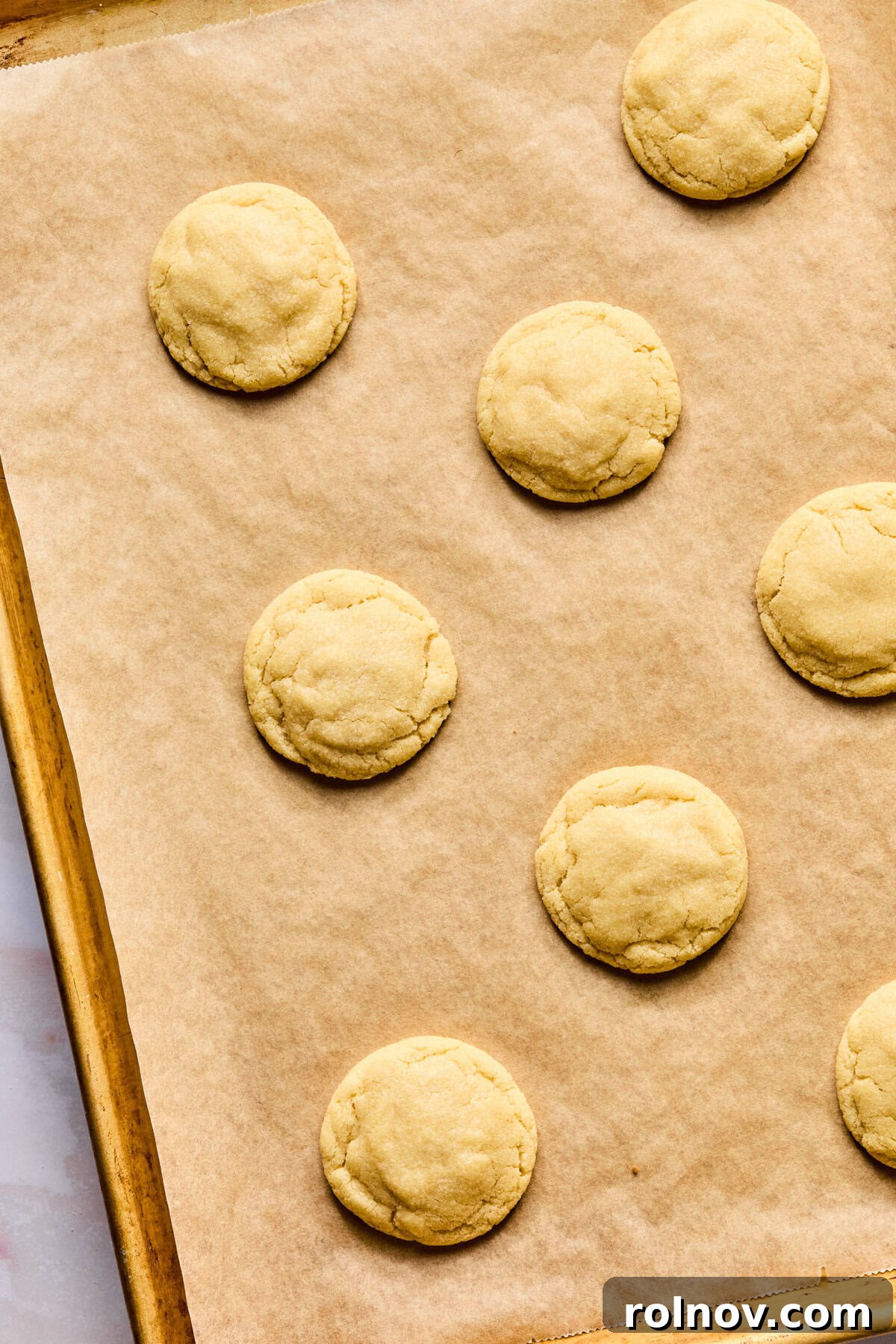
Step 7: Bake the Cookies. Preheat your oven to 350°F (175°C). Bake the cookies for 8-11 minutes. They are ready when the edges are just set and lightly golden, and the tops appear slightly puffy but are starting to settle and may show a few delicate crinkles. They might look slightly underbaked in the center, but that’s key to their chewiness. Remove from the oven and, if you desire perfectly round cookies, use a biscuit cutter slightly larger than your cookie to gently “shuffle” them into shape while they are still warm. Allow them to cool on the baking sheet for several minutes before carefully transferring them to a wire rack to cool completely. (It’s tempting to eat them warm, but cooling them properly ensures the best texture and allows the icing to set beautifully!).
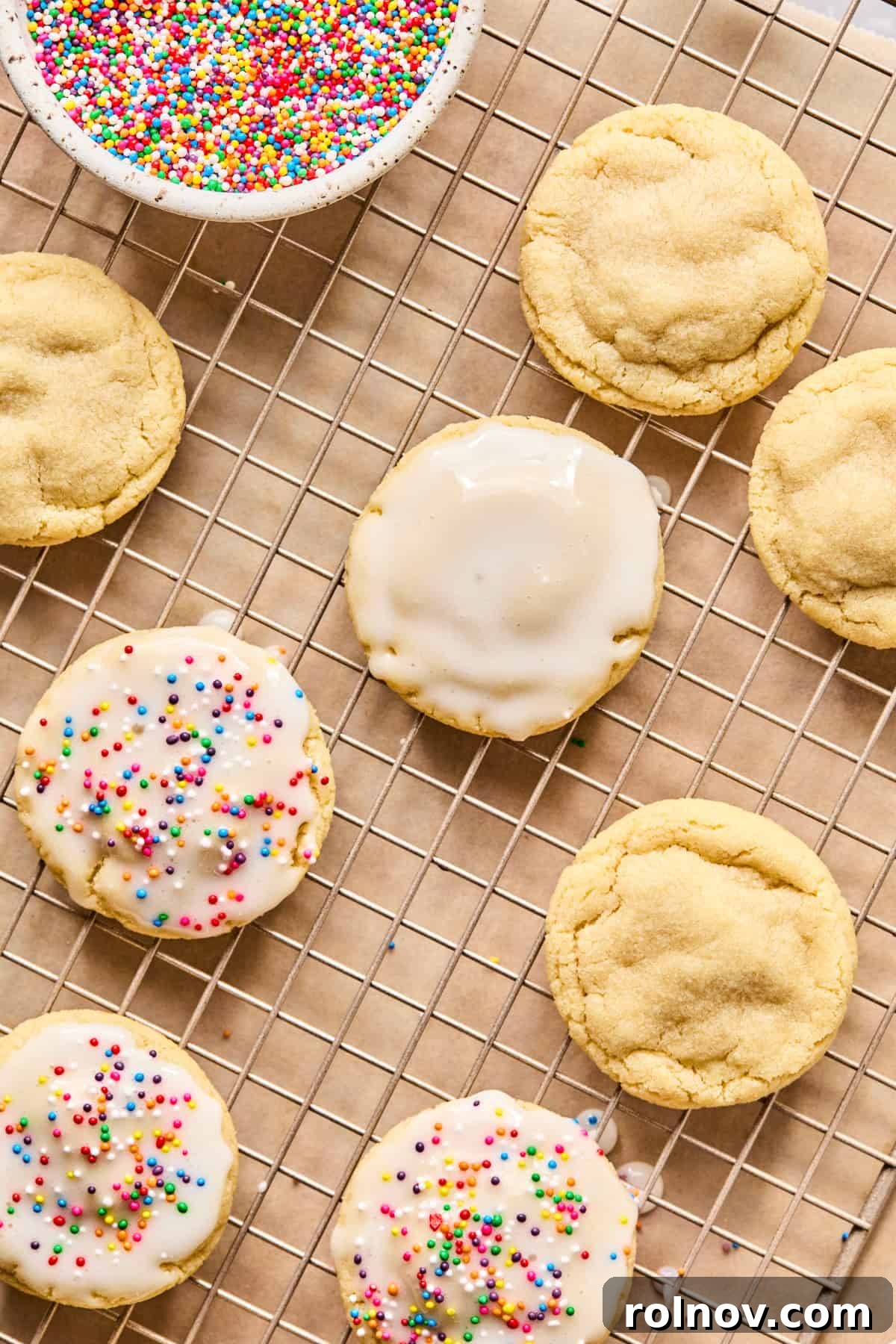
Step 8: Glaze and Decorate. Once the cookies have cooled completely to room temperature, prepare the icing glaze. In a small bowl, whisk together the powdered sugar, half-and-half (or milk), and almond extract until smooth and drizzle-able. The consistency should be thick enough to coat a spoon but thin enough to drip off. Dip the top of each cooled cookie into the glaze, allowing any excess to drip off. Immediately sprinkle some nonpareils or other desired sprinkles over the wet glaze. Place the iced cookies back on the wire rack and allow the glaze to set completely, which usually takes about 30-60 minutes depending on humidity.
Expert Tips for Irresistible Iced Sugar Cookies
Baking the perfect batch of chewy iced sugar cookies is an art, but with these expert tips, you’ll achieve consistent, delicious results every time.
Master the Art of Creaming Butter and Sugar: This step is foundational for the texture of your cookies. Always, always make sure to cream your softened butter and sugars together well enough. Do not cut corners or shorten the time. This process incorporates air into the mixture, which is crucial for creating light, tender, and chewy cookies. Creaming for 2-3 minutes until the mixture is visibly lighter in color and fluffy will significantly impact the final texture, giving your cookies the perfect lift and spread.
Understanding “Softened” Butter: A common mistake is using butter that is too warm. Softened butter is not warm, greasy, or shiny. It should still hold its shape quite well but yield to a gentle finger press, leaving a small indentation. The ideal internal temperature for softened butter is between 65°F and 67°F (18°C-19°C), which is cooler than many realize. Butter that is too warm or melted will cause your cookies to spread excessively during baking, resulting in thin, crispy, and often greasy cookies—definitely not the desired chewy texture!
Embrace Slight Underbaking for Chewy Perfection: When it comes to achieving that coveted chewy texture, err on the side of underbaking these sugar cookies. When you pull them out of the oven, they may appear slightly underdone in the center, with edges just beginning to set and turn light golden. This is exactly what you want! The residual heat of the baking sheet will continue to cook the cookies as they cool, leading to a perfectly soft and chewy center. Overbaking, even by a minute or two, can quickly turn them from chewy to firm or dry. The line between perfectly baked and overbaked can be subtle, so trust your instinct to pull them out when they still look just a touch soft.
Measure Flour Accurately: For consistent results, especially when baking, measuring flour by weight (grams) is always recommended over volume (cups). If you don’t have a kitchen scale, make sure to spoon your flour into the measuring cup and level it off with a straight edge. Never scoop flour directly from the bag, as this can pack it down and lead to significantly more flour than intended, resulting in dry, dense cookies.
Uniform Cookie Size for Even Baking: Using a cookie scoop (e.g., 1.5-inch or 1-ounce scoop) will ensure that all your cookie balls are roughly the same size. This consistency is vital for even baking, preventing some cookies from being underdone while others are overbaked.
Parchment Paper is Your Friend: Always line your baking sheets with parchment paper. This prevents sticking, ensures even browning on the bottom, and makes cleanup a breeze. It also helps regulate the temperature for more consistent baking.
Cooling is Crucial: Allow the cookies to cool on the baking sheet for at least 5-10 minutes after removing them from the oven. This gives them time to set up and firm slightly, making them less prone to breaking when transferred to a wire rack for complete cooling. Icing warm cookies will cause the glaze to melt and run off, so patience is key!
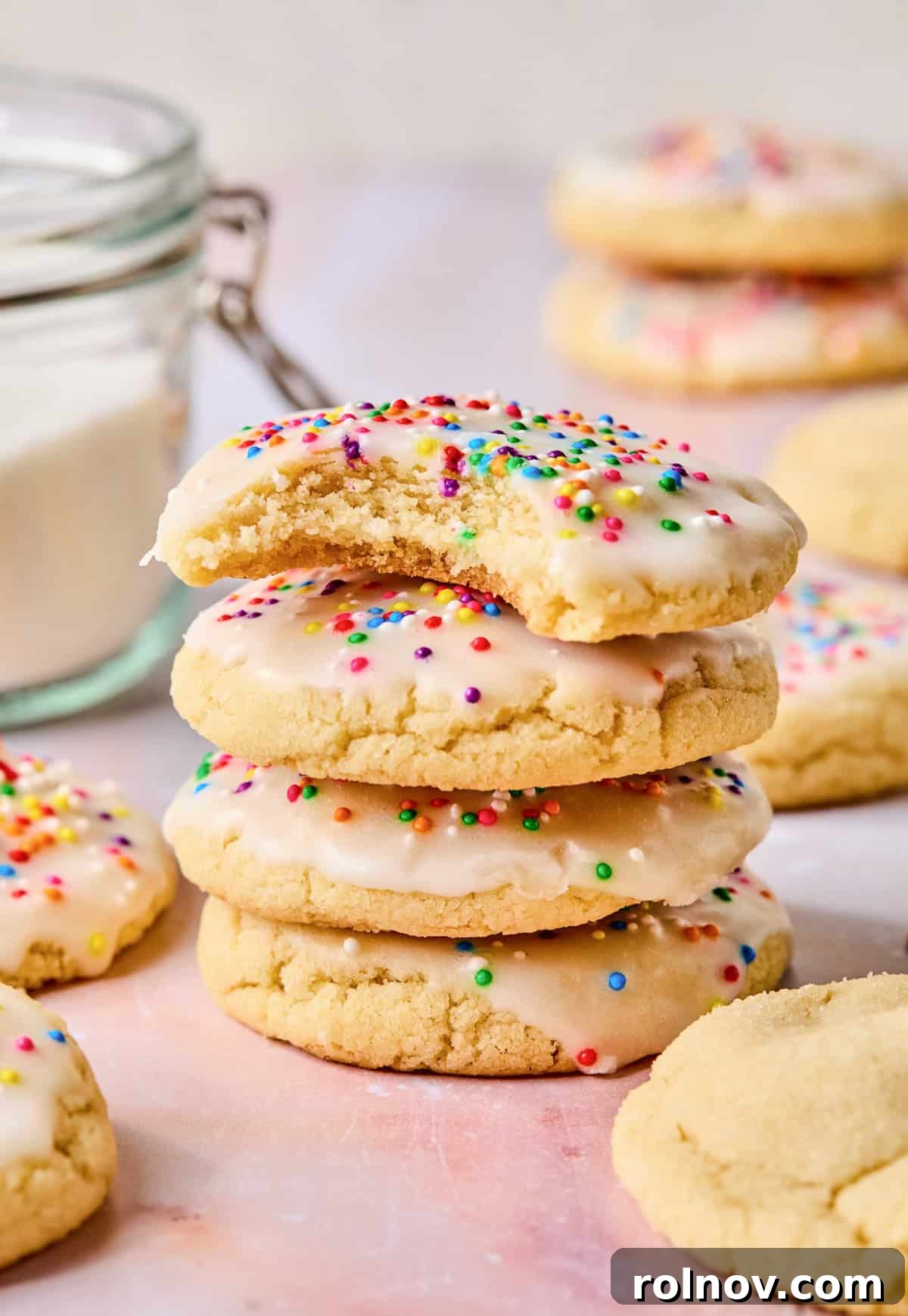
Storage Solutions for Your Chewy Iced Sugar Cookies
Proper storage ensures your iced sugar cookies remain fresh and delicious for as long as possible, whether you’re enjoying them fresh or planning ahead.
Room Temperature Storage: Store these cookies in an airtight container at room temperature for approximately 3-4 days. For optimal texture and flavor, it’s best to enjoy them within the first 2 days after baking and icing. After this period, they may start to lose some of their signature chewiness and become slightly drier. To maintain maximum freshness, consider adding a slice of bread to the container; the cookies will absorb moisture from the bread, helping them stay soft.
Freezing Baked and Iced Cookies: These sugar cookies are wonderfully freezer-friendly once they are completely cooled and the icing has fully set. To freeze, place the cookies in a single layer on a baking sheet and freeze for about an hour until firm. Then, transfer them to an airtight freezer-safe container or a heavy-duty freezer bag, layering them with parchment paper between each layer to prevent sticking and damage. They can be frozen for up to 3 months. When you’re ready to enjoy them, simply remove the desired number of cookies from the freezer and allow them to thaw at room temperature for an hour or two before serving. This makes them an excellent make-ahead option for holidays or unexpected cravings.
Freezing Cookie Dough: For even greater convenience, you can freeze the unbaked cookie dough. After shaping the dough into balls as instructed in Step 6, arrange them on a baking sheet and freeze until solid. Once firm, transfer the frozen dough balls to an airtight freezer-safe bag. They can be stored in the freezer for up to 3 months. When ready to bake, you can either thaw them slightly at room temperature (for about 30 minutes) before baking, or bake them directly from frozen, adding an extra 2-4 minutes to the baking time. This method allows you to have fresh-baked cookies with minimal effort whenever you desire.
HUNGRY FOR MORE? Don’t miss out on delicious recipes and baking tips! Subscribe to my newsletter and follow me on Facebook, Instagram, and Pinterest for all the latest culinary inspiration!
Classic Chewy Iced Sugar Cookies

Ingredients
Cookies
- ½ cup unsalted butter (113g), softened
- 1 ¼ cup all-purpose flour (152g) *see note below
- ½ cup plus one Tbsp granulated sugar (112 g)
- 1 Tbsp light brown sugar, packed (18 g)
- 1 tsp vanilla extract
- ½ tsp almond extract
- 1 large egg yolk, room temperature
- ¼ tsp baking soda
- ½ tsp baking powder
- ¼ tsp salt
- Granulated sugar to roll cookie dough in, if not icing
Icing Glaze
- 1 ½ cup powdered sugar
- 4-5 Tbsp half and half or milk
- ½ tsp almond extract
- Nonpareils sprinkles
Instructions
-
In a small bowl, combine flour, baking soda, baking powder and salt. Whisk together until well combined.
-
In a medium bowl, using a hand or stand mixer, cream the butter, brown sugar and granulated sugar until light and fluffy (about 2-3 minutes). Add in the egg yolk, almond extract, and vanilla extract and beat until just combined.
-
Slowly pour in the dry ingredients and beat just until combined—do not overmix. The cookie dough may be a bit crumbly or in pieces; gently press and pull it together with your hands. Roll cookie dough into about 1½ inch balls. If you do not plan on icing them later, you can roll them in granulated sugar before baking. Arrange on a parchment paper-lined baking sheet about 2 inches apart.
-
Bake for 8-11 minutes, or until the edges are set and lightly golden, and the tops are slightly puffy but starting to settle and show delicate crinkles. They may look slightly underbaked in the center. For perfectly round cookies, use a biscuit cutter to gently shuffle them into shape while still warm. Allow to cool on the baking sheet for several minutes before transferring to a wire rack to cool completely.
-
Once cookies have completely cooled, whisk the icing ingredients (powdered sugar, half-and-half or milk, almond extract) together until smooth. Dip the top of each cookie in the glaze and immediately add some nonpareils or other sprinkles over top. Allow to set completely on a wire rack.
-
Store in an airtight container at room temperature or freeze for longer storage.
Notes
Storage: Store these delicious cookies in an airtight container at room temperature for about 3-4 days. For optimal freshness and that signature chewy texture, it’s best to enjoy them within the first 2 days.
Freezing Baked Cookies: These sugar cookies freeze beautifully once completely cooled and the icing has set. To prevent sticking, layer them with parchment paper in an airtight freezer-safe container. They can be frozen for up to 3 months. Thaw at room temperature before serving.
Freezing Cookie Dough: For future convenience, you can also freeze the unbaked cookie dough balls. Place them on a baking sheet to freeze until solid, then transfer to a freezer bag. Bake from frozen (adding a few extra minutes) or after a short thaw.
Creaming Butter and Sugar: Always ensure you cream your butter and sugar thoroughly until light and fluffy. This step is crucial for the cookies’ texture and should not be rushed.
Softened Butter Temperature: Remember that “softened butter” means it yields to a gentle press but is still cool, ideally 65°F-67°F. Over-warming your butter will lead to cookies that spread too much.
Underbaking for Chewiness: It’s better to slightly underbake these sugar cookies. They may appear not quite ready when you pull them out, but this ensures they retain moisture and achieve that perfect, soft chewiness as they cool.
Nutrition
Carbohydrates: 21g,
Protein: 1g,
Fat: 5g,
Saturated Fat: 3g,
Polyunsaturated Fat: 0.2g,
Monounsaturated Fat: 1g,
Trans Fat: 0.2g,
Cholesterol: 22mg,
Sodium: 46mg,
Potassium: 27mg,
Fiber: 0.2g,
Sugar: 15g,
Vitamin A: 160IU,
Calcium: 12mg,
Iron: 0.4mg
Nutrition information is automatically calculated and should only be used as an approximation.
Did you enjoy this recipe? Have a question?Leave a comment below!