It is vital to understand that we adopt not because we are rescuers, but because we are rescued.
Today, I’m honored to share the second chapter of our profound adoption journey—a narrative deeply rooted in rescue. Our son, Sam, irrevocably saved our lives, especially mine, and for that, I am eternally grateful to the remarkable woman who carried him for nine months, blessing us with his presence. Birth mothers embody an extraordinary strength, and through this story, I offer a glimpse into the intricate path that led us to our beloved Samuel Noah.
If you missed the beginning, you can catch up on the foundational elements of our story in Our Adoption Story: Part I. This installment delves into the intense, often overwhelming world of adoption—a process brimming with anxiety, yet unequivocally worth every moment. Given the chance, I would navigate every challenge again, simply to have Sam as our son.
To honor her privacy, I’ve chosen to refer to Sam’s birth mother as “Hope.” It took thoughtful consideration to select a name that truly captured her essence, but as she became our beacon of hope, the name felt perfectly fitting. Should she ever encounter these words, I pray she recognizes the immense specialness she holds in our hearts and understands that our family’s joy is a direct result of her incredible sacrifice and boundless bravery.
So, let us continue our journey.
I concluded Part One with the poignant phrase describing adoption as a “Hurry up and wait” process. This paradoxical truth defines much of the experience. We were fortunate that our waiting period wasn’t as protracted as many others endure, yet the accompanying anxiety was unlike anything I had ever encountered before.
Navigating the Home Study Process
Every adoption journey officially commences with the home study—a comprehensive assessment that serves as your “certification” to adopt. This rigorous process involves a lengthy checklist of requirements that prospective parents must fulfill to even be considered for placement. For couples who have endured years of trying to conceive and carry a child biologically, a subtle undercurrent of cynicism can arise during the home study. It’s hard to ignore the reality that these extensive evaluations and preparations wouldn’t be necessary had pregnancy occurred naturally. While others visibly experience pregnancy, free from fingerprinting, fire inspections, or mandatory parenting classes, we embraced each step as an essential means to our ultimate goal: parenthood. This was our path, and we committed to traversing it with utmost efficiency.
Typically, a home study can take upwards of 12 weeks to complete. Driven by our unwavering determination, we managed to accelerate this timeline, finishing ours in under 10 weeks. We meticulously scheduled all mandatory classes, even driving over an hour for one crucial session, ensuring no delays hindered our progress.
Our adoption agency boasted a dedicated team of social workers, and while we primarily interacted with Tonya, we truly felt we were connected with the best. In this often-complex process, your social worker becomes a multi-faceted pillar of support: part therapist, part knowledgeable guide, and an unwavering cheerleader. Tonya conducted three visits to our home during the home study phase. Ahead of her first visit, a wave of nerves washed over me. The idea that a stranger held the power to deem us fit or unfit parents was daunting. However, the moment I met her, any apprehension dissipated.
I must admit, some of these visits felt remarkably similar to couples therapy, yet in the most beneficial way. Many of the questions and discussions we engaged in ultimately highlighted one profound truth: Anthony and I possessed the resilience to navigate the most challenging times together, a strength we had demonstrated repeatedly throughout our journey. Our shared struggles hadn’t broken us; instead, they had forged a stronger, more united couple, a testament to our enduring partnership. Reaching this point, still standing strong, was proof of our unwavering bond.
As part of the home study, we were also required to read three books, which we later discussed in depth with Tonya. Though some of the material was a bit dated, these books offered invaluable insights into raising an adopted child, provided essential perspectives from birth mothers, and illuminated various real-life scenarios surrounding adoption. Devouring three books within such a short timeframe was challenging, but our resolve to move quickly propelled us forward.
Perhaps the most emotionally challenging aspect of the home study was a mandatory class held at a hospital. While ostensibly designed for “expecting parents,” its content and atmosphere were unmistakably tailored for those experiencing physical pregnancy. We arrived slightly early, gathering in the lobby with other couples. It was easy to identify fellow attendees as several pregnant couples naturally gravitated towards each other, engaging in animated chatter. A sense of unease began to settle over me; I wasn’t entirely sure how I would cope as the only person not visibly eight months pregnant. Nevertheless, I held my head high, attempting to blend into the group as I awaited Anthony’s return from parking the car.
At that precise moment, the instructor walked past me, her back turned, and addressed the huddle of pregnant couples, remarking on their clear attendance for the class. It was then that tears began to stream down my face. I discreetly stepped away for a few minutes, silently pleading with myself to regain composure. I desperately wanted to be strong, to endure this without breaking. No one had intentionally sought to hurt my feelings, yet the raw emotions, a culmination of years of longing and loss, simply overwhelmed me.
Anthony entered, his eyes immediately finding me as I walked away. He approached, knowingly asking what was wrong as he gently kissed my forehead. I explained the situation, and he simply assured me that I was doing my absolute best and that it was perfectly okay to feel what I was feeling. Since we were on the hospital’s main floor, Anthony quickly ducked into the gift shop to procure much-needed tissues. Meanwhile, one of the kind ladies working there noticed me trying to hide my tears in a corner. She walked over, offered me the biggest, most comforting hug, and repeatedly whispered, “It’s gonna be okay, baby, it’s gonna be okay.” (Remarkably, as I type this now, I’ve made it this far without crying—a new personal record, I suppose!) She was a complete stranger, entirely unaware of the depth of my sorrow, yet her embrace, her simple act of compassion, meant the world to me in that dreadful moment. It truly illustrated how small gestures of kindness towards strangers can leave an indelible, lifelong impact. Her presence was a beautiful, unexpected interruption to an otherwise painful experience, and I remain profoundly grateful.
I wish I could say the tears stopped after Anthony returned with the tissues. However, our group of about ten couples then boarded the elevator to the labor and delivery floor. The instructor’s small talk revolved entirely around where each couple planned to deliver, causing my tear ducts to continue their relentless flow, showing no sign of abating. I only managed to stop crying after the segment of the class dedicated to promoting breastfeeding (to be fair, she did preface it with a disclaimer that it was hospital policy to do so). And, true to my luck, there was no real opportunity to hide in the small, box-like classroom. Yet, I persevered, making it through to the end.
As we prepared to leave, the instructor approached us, concerned, asking if everything was alright. We then had the opportunity to explain our unique circumstances. It’s crucial to remember that this experience occurred only a month after our final fertility treatment had failed. The emotional wounds were still fresh, and I was actively grieving the profound realization that I would likely not carry or give birth to my own child. The entire concept of adoption was still so new, so far removed from the future I had always envisioned. Sitting through a two-hour class surrounded by nine other couples on the verge of welcoming their biological babies was, to say the least, not my idea of an enjoyable evening.
But I survived. We survived. We left that evening, firmly reminding ourselves that this challenging class was merely a means to an end. And the end we so desperately longed for was closer than it had ever been before.
After that emotionally taxing class was behind us, we attended another session that was specifically designed for adoptive and foster parents. The atmosphere was a world apart—supportive, understanding, and immensely more comfortable.
The sheer volume of paperwork required for the home study is substantial, but one particular document stands out as the most emotionally taxing. I recall one form that felt like a hundred pages long, though in reality, it was probably closer to ten sides, with each side containing at least 75 intricate questions. This comprehensive survey delved into every conceivable factor we would consider in our adoption journey. It covered everything from race and ethnicity to every imaginable health complication. I distinctly remember a question asking, “Would you consider a child who has a history of schizophrenia on the father’s side of the family?” This survey truly explored every option, even those we hadn’t known existed. This exercise stirred deep contemplation; while the desire to be open to absolutely any child is profound, there’s also the crucial need to be realistic about what you, as a couple, are equipped to handle.
The countless forms, the fingerprinting process, the fire inspection by the local fire department, ensuring emergency numbers were prominently posted, hanging a fire escape plan, a thorough safety walk-through conducted by our social worker, background checks, the required reading, and all the classes and visits completed—finally, the home study was done. Our initial thought was, “Time to relax, right?!”
Not quite.
For me, the most arduous part of the entire process emerged just after the completion of the home study.
Before our profile could even be presented to potential birth mothers, we were tasked with creating “our book.” This wasn’t just any book; it was a carefully curated portfolio that the agency would use to market us to birth mothers. Can you imagine the immense difficulty of writing an entire book about yourselves, attempting to eloquently convey why you are the ideal individuals to raise the child another woman is carrying? It was an excruciatingly difficult endeavor.
As a writer, I generally enjoy the craft, but undertaking a piece of writing that carried such profound weight and potential impact was a truly daunting task. I spent countless hours frozen before the computer, battling the most stubborn case of writer’s block. Every photograph I selected, every single word I penned, was subjected to intense scrutiny and over-analysis by the perfectionist within me. Yet, after what felt like endless hours of blood, sweat, and tears, we finally produced a finished product that filled us with immense pride and was ready for presentation. In addition to the physical book, we had also submitted a shorter, condensed version of our profile for display on the agency’s website.
To provide a clearer understanding of the depth and detail involved, I’ve included a few screenshots from our book. I hope they offer some insight into this unique creation!
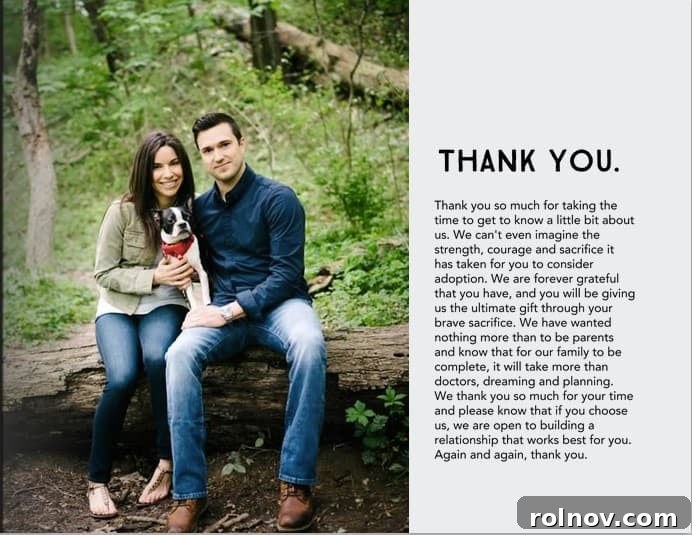
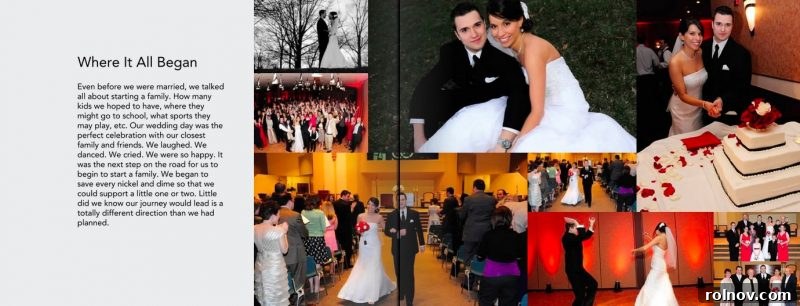
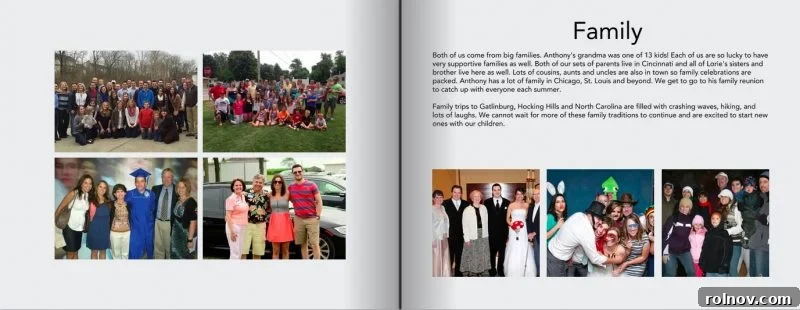
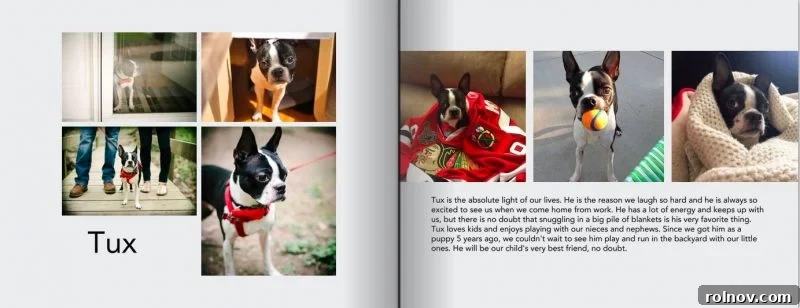
The remainder of the book thoughtfully detailed aspects of our lives, including our cherished friends, our shared hobbies, our welcoming home, personal insights about each of us as individuals, and various other elements that painted a comprehensive picture of who we are. Crafting this book was truly a labor of love, filled with blood, sweat, and tears. Yet, it stands as a timeless keepsake we will forever share with Sam, and it represents the very conduit that first connected us to Hope. For these reasons, it holds an incredibly special place in our hearts.
The Agonizing Wait in Adoption
With our adoption profile book finally completed and multiple copies ordered, and the rigorous home study officially behind us, we felt a profound sense of readiness. Every electrical outlet in the house was covered, essential baby-proofing measures were in place, and our home truly felt prepared. We were poised, ready for the next, most challenging phase: the wait.
Almost immediately after placing the order for our books, an unexpected call came from the agency. There was an interested prospective birth mother. She wanted our book immediately. A surge of heat rushed through me, my heart pounded with a frantic rhythm. The physical copies of our books were still two days away, en route via mail, but suddenly I yearned for a way to intercept them, to magically retrieve them from wherever they were. Such a feat was impossible, so I was forced to endure an agonizing two-day wait. The moment they arrived, I sped to the agency to deliver them.
The kaleidoscope of emotions was surreal. Could this truly be happening? Was this our long-awaited breakthrough? Surely, we deserved this after all our patience and effort. We envisioned a smooth, straightforward path to adoption unfolding before us. We waited with bated breath to hear news from the agency later that week, eager to learn if the prospective birth mother was interested in matching with us.
The call eventually came, but it wasn’t the news we had so desperately hoped for. The birth mother’s family had learned of the adoption plan, creating an unexpected uproar. We were advised to “wait it out” for a few weeks, told that sometimes these situations simply require a little more time. The message was a heavy blow—more waiting, the absolute last thing I wanted to hear.
So, we waited. And waited some more. We tried diligently to busy ourselves, to find distractions, but this was far easier said than done. Days turned into weeks, but the phone remained silent. There was no ring, no call from the agency. The family did not come around to the idea. And just like that, our first potential child, our glimmer of hope, slipped right through our fingers. We felt utterly powerless in the situation, with nothing left to do but revert to our previous state: waiting.
Approximately a month passed, and we heard nothing—precisely what we had been warned would be the case; “no news was no news.” This prolonged period of waiting became a form of psychological torture. We had been cautioned about its difficulty, but it proved far worse than I could have ever imagined. Friends and family, aware of our situation, would inquire about updates, and we consistently had nothing to share. Life continued its relentless pace around us, yet our entire existence felt consumed by one agonizing question: WHEN? Just tell us, please, when will our time come?
And then, it happened. The call finally came. It was a miserably rainy day in June. I was at work, on a break, when I saw the agency’s number flash across my phone screen. I walked to the small living area at the front of our store and sank onto the couch, heart pounding, waiting to hear the director’s voice. The familiar rush of heat washed over me, my heart hammering louder than ever before. When she finally answered, her voice was warm, and she uttered the words that would change everything:
“Lorie, I just met the most lovely girl. And she wants to meet you and Anthony. Her name is Hope.”
While I initially anticipated that today’s installment would include the momentous day we first met Sam, I clearly underestimated the sheer volume of preparation and the initial, emotionally charged waiting periods involved in the adoption journey.
So, it seems you, too, will have to wait—but only until next week, when I will joyfully bring you Part Three of our story. I promise you, it will be well worth the anticipation. xoxo
Thank you, again and again, for reading and for allowing me the privilege to share such an intimate part of our lives. Sharing this story as we approach Mother’s Day weekend sends chills down my spine. I simply cannot wait to bring you the next chapter.
For the next part of our incredible journey, make sure to check out Part III of our adoption story.